 EN
EN
Unwavering Support for Healthcare Providers
2026/02/25
2026/02/27

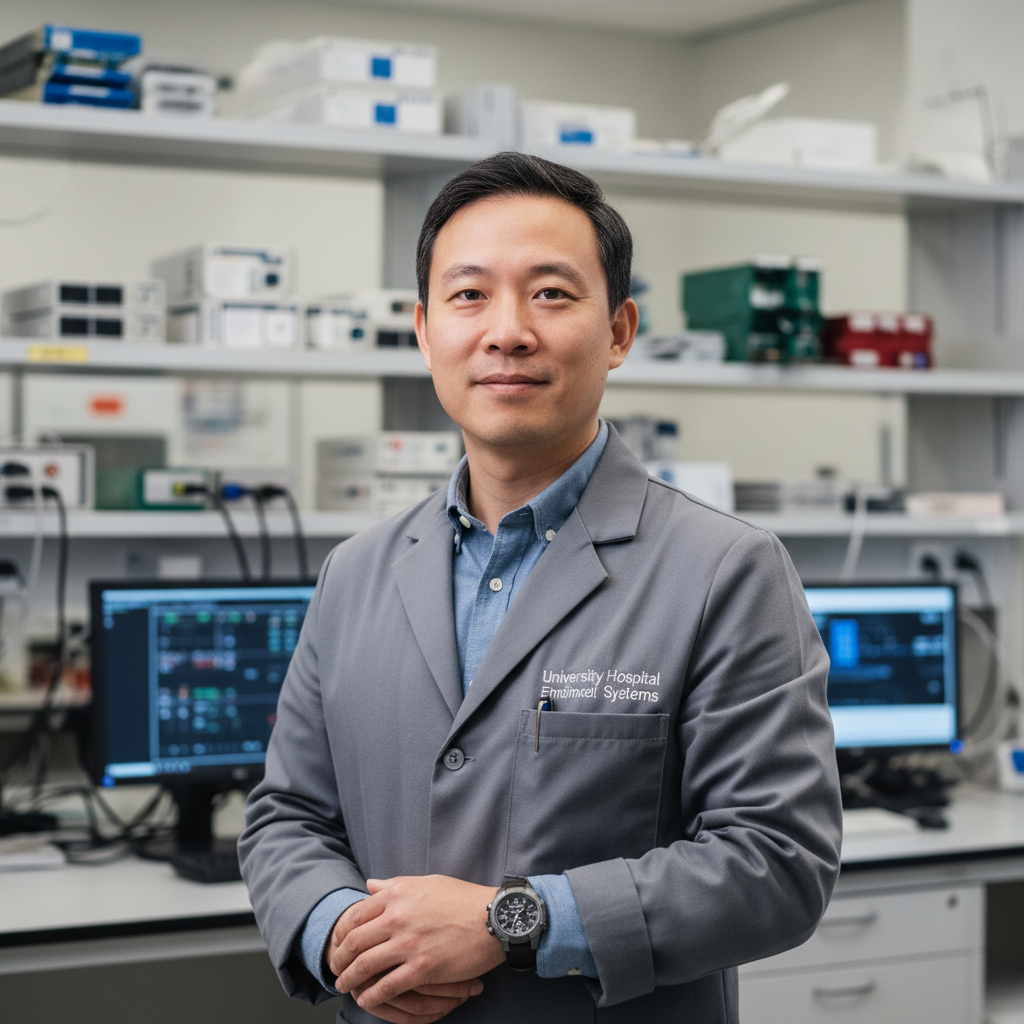
Author: Jian Wang (王健), RAC
Vice President, Quality & Regulatory Affairs at VistaMed Technologies
As the guardian of VistaMed's global compliance and quality systems, Jian Wang has a first-hand, auditor's perspective on what truly makes a medical device supply chain resilient and reliable for distribution partners.
"On time, every time." It's an easy promise for a manufacturer to make over a handshake at a trade show. It's much harder to keep when a key sub-supplier's factory floods, a global pandemic shuts down air freight, or a new regulation makes your entire inventory obsolete overnight.
I’ve spent nearly two decades navigating these disruptions. From my perspective in Quality and Regulatory Affairs, a resilient medical equipment supply chain isn't a matter of luck; it is a matter of deliberate, verifiable design. For a distributor, choosing a partner based on the robustness of their supply chain is just as critical as choosing them for the quality of their product. An out-of-stock product is a product with zero value.
Many distributors still believe the myth that the best supply chain is the one that delivers the cheapest product. This is a dangerous oversimplification. A truly resilient supply chain delivers predictability, compliance, and peace of mind.
It's a system, not a single attribute. It’s a series of strategic choices a manufacturer makes that, taken together, insulate their distribution partners from chaos. The core components are:
The choice you make in a manufacturing partner has a direct and profound impact on your day-to-day business. The difference between a fragile supply chain and a resilient one is the difference between constant firefighting and predictable growth.
|
Supply Chain Feature |
The "Low-Cost" Assembler |
VistaMed's Resilient Manufacturing Model |
How This Impacts Your Business |
|
Manufacturing Control |
Assembles components sourced from dozens of unverified sub-suppliers. |
Vertically integrated: key processes managed in our own 20,000 sq ft ISO 13485 facility. |
Fewer points of failure. More consistent product quality. Less risk of production delays. |
|
Supplier Redundancy |
Single-sourced for key components to get the lowest price. |
Dual- or tri-sourced for all critical components, with all suppliers audited to our quality standard. |
Insulates you from factory shutdowns or component shortages at a single sub-supplier. |
|
Inventory & Delivery |
Unpredictable lead times. Delivery promises are often broken. |
A proven 99.5% on-time delivery rate, supported by sophisticated inventory management. |
You can carry less safety stock, improve your cash flow, and confidently promise delivery dates to your customers. |
|
Regulatory Agility |
Struggles to keep up with new regulations, putting your inventory at risk. |
Proactively certified to the highest global standards (e.g., CE under EU MDR 2017/745). |
Your product line is future-proof. You can enter new markets faster and with more confidence. |
The practical benefit of this resilience is something we live every day. The fact that VistaMed was featured in "MedTech Dive" for our supply chain resilience during the height of the pandemic wasn't an accident. While our competitors were scrambling because their single-source chip supplier in Southeast Asia had shut down, our redundant sourcing strategy meant we could pivot to our qualified backup supplier and maintain production. While their distributors' shelves were empty, ours were full.
That is what a resilient partnership looks like in practice. It's not just a theoretical benefit; it's a tangible competitive advantage for you.
The trend towards global regulatory harmonization, championed by bodies like the International Medical Device Regulators Forum (IMDRF), is a massive opportunity for distributors with the right partners. The goal of IMDRF is to create a standardized set of requirements for things like Quality Management Systems.
A manufacturer like VistaMed, whose QMS is already built to the highest global standard (ISO 13485:2016) and is audited by multiple international bodies (from BSI in Europe to the FDA in the US and the NMPA in China), is already living this harmonized reality. This means the product we build for the German market is built to the same fundamental quality standard as the one we build for the American or Brazilian market. For you, the distributor, this creates incredible efficiency. The core product is the same. The core quality is the same. Only the market-specific labeling and regulatory paperwork needs to be adapted.
"Lead times from Asia are always so long. How do you manage this?"
This is a valid concern. We address it in three ways: 1) Our high degree of vertical integration means we are less dependent on the lead times of others. 2) Our dedicated logistics team works with a portfolio of trusted freight forwarders to optimize routes and booking times. 3) For our strategic partners, we establish a forecasting and inventory management plan to ensure a predictable flow of products, moving from a "just-in-time" model to a "just-in-case" buffer system that we manage together.
"What happens if a new regulation comes into effect? Is my stock protected?"
This is my core responsibility as Head of RA/QA. We don't just react to new regulations; we plan for them years in advance. For example, we transitioned our entire relevant portfolio to the new EU MDR well before the final deadline. Our partners holding MDD-certified stock were given a clear transition plan to phase out old inventory and phase in the new MDR-compliant product, ensuring they were never left with unsellable goods. That is the essence of regulatory partnership.
"How does your location in Shenzhen affect supply chain reliability?"
We view our location as a major strategic advantage. Shenzhen is the world's hub for electronic components, giving us unparalleled access to a vast and competitive ecosystem of suppliers. This allows us to build and maintain the robust, multi-source supplier network that is the foundation of our resilience. We can source better components, faster, and with more redundancy than a manufacturer located anywhere else in the world.
About the Author
Jian Wang (王健), RAC serves as Vice President, Quality & Regulatory Affairs at VistaMed Technologies. As a certified Regulatory Affairs professional (RAC) with over 18 years of experience, he masterfully navigates the complex landscape of international medical device regulations and quality systems. He has personally led the efforts for VistaMed to secure and maintain critical certifications and has designed the resilient supply chain processes that ensure our partners receive compliant, high-quality products on time. This guide is a direct reflection of his hands-on experience building a global supply chain you can trust.
Clinically & Regulatory Reviewed By: Fang Chen (陈芳), Director of Global Product Strategy & Customer Insights
The information provided is for informational purposes and intended for a B2B audience of healthcare professionals and procurement decision-makers. It is not a substitute for professional medical or financial advice. TCO and ROI results may vary based on facility size, usage patterns, and local market conditions. All certifications and regulatory clearances referenced are accurate as of the date of publication. Please contact VistaMed Technologies for the most current documentation.
2026/02/25