 EN
EN
Unwavering Support for Healthcare Providers
2026/02/25
2026/03/01
Author: Dr. Evelyn Reed, MD
Lead Medical Content Reviewer & Clinical Advisor at VistaMed Technologies
As a licensed physician specializing in medical communications, Dr. Reed translates complex clinical data and technical information into clear, accurate, and actionable insights for healthcare professionals and partners.
I've seen distributors try to sell hospital-grade glucose meters to community health centers. It's a classic, costly mistake. Others will pitch a cheap, consumer-grade meter, thinking the CHC's tight budget is the only factor that matters.
That's also wrong.
My stance, based on years of reviewing device performance in different clinical settings, is unequivocal: the Community Health Center is not a "small hospital" or a "big family." It is a unique, brutal environment for medical devices, and if you sell the wrong product into it, your reputation will suffer and your profits will evaporate in a wave of returns. For you, the distributor, understanding this distinction is the key to becoming a valued partner instead of just another name on a PO.
This is a dangerous fallacy. A consumer meter, the kind you buy at Walgreens, is designed to be used a few times a day by a single, careful owner. It sits on a nightstand.
A meter in a CHC is a workhorse. It's used 50, 100, 200 times a day. It’s handled by a dozen different medical assistants with varying levels of training. It’s dropped. The test strip port is subjected to constant, forceful insertions. It's wiped down with harsh chemicals. A consumer meter will simply disintegrate in this environment. The true cost to the clinic isn't the device price; it's in the constant strip waste from usage errors, the staff time spent dealing with failed devices, and the clinical risk of an inaccurate reading.
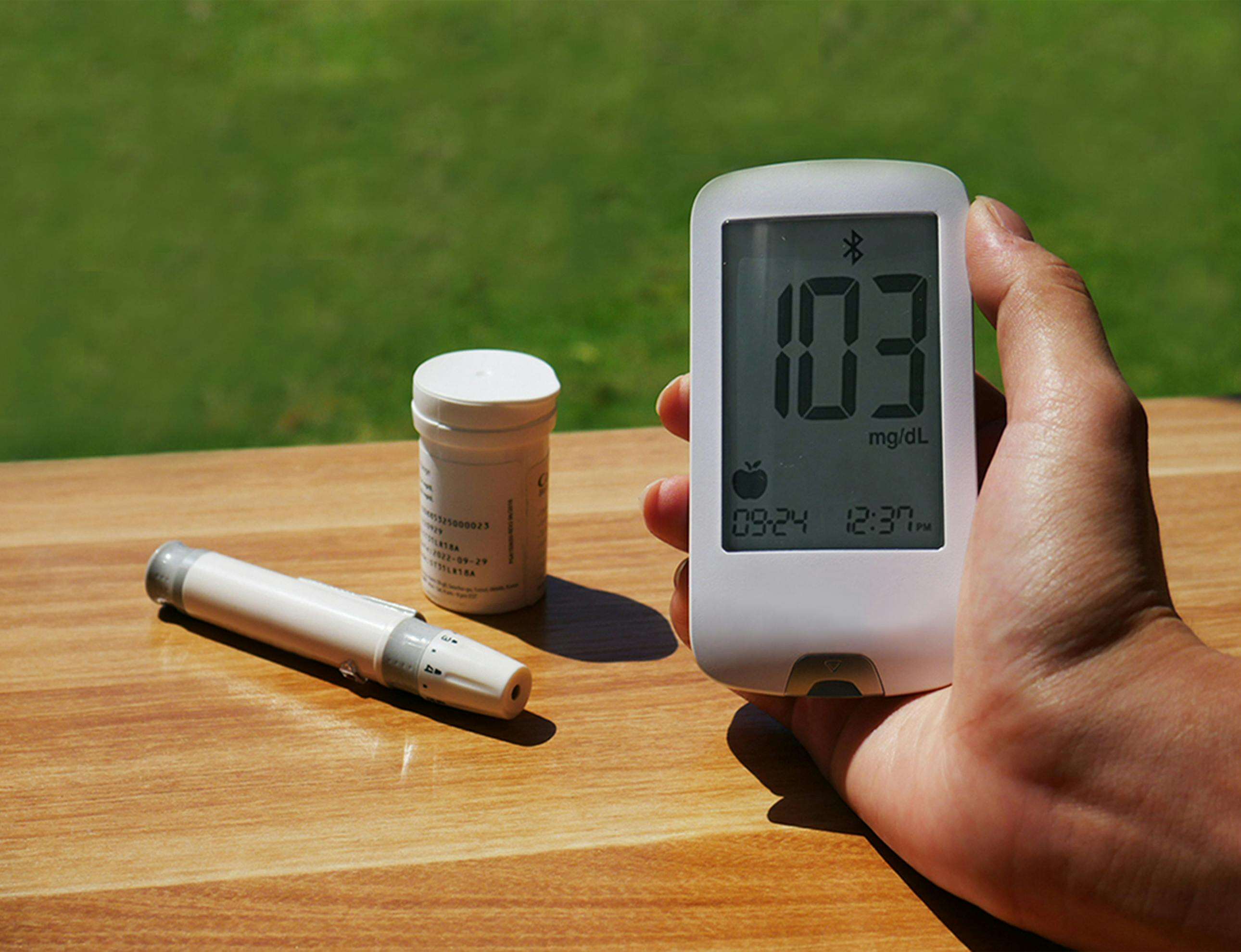
A smart distributor doesn't sell features; they sell a solution to a specific environmental problem. A CHC needs a device that is more durable than a consumer meter but less complex and costly than a hospital ward system.
Here’s how a clinician who understands a clinic's P&L would compare the options.
|
Feature / Consideration |
Typical Consumer Meter |
Hospital Ward Meter (e.g., Abbott PrecisionWeb) |
VistaMed BG-Connect (CHC-Optimized) |
Your Sales Advantage |
|
Durability & Build |
Flimsy, lightweight plastic. Mushy buttons. |
Heavy, often tethered to a large docking station. |
Reinforced polymer casing with a solid, tactile feel. A strip port validated for 10,000+ insertions. |
You can literally hand the devices to the clinic manager and say, "Feel the difference." The |
|
Strip Handling & Workflow |
Fiddly, small strips in a spill-prone vial. |
Complex cartridges or single-use, over-packaged strips. |
Large, easy-to-handle strips in a spill-proof vial designed for one-handed opening. |
This is a massive workflow win. For a medical assistant testing dozens of patients, fumbling with tiny strips is a huge time sink and source of contamination. |
|
5-Year Total Cost of Ownership (TCO) |
Low unit cost. High failure rate and strip waste. |
Very high unit and per-test cost. |
Moderate unit cost. Industry-leading low failure rate (<0.5%) and a 5-year warranty. |
This is your core business argument. The warranty alone eliminates the CHC's fear of paying for out-of-pocket repairs or replacements on a high-use device. |
|
Data & Security |
No security. App (if any) is not HIPAA-compliant. |
Fully networked system requiring a major IT project and support contract. |
Simple, secure, HIPAA-compliant app with easy PDF export. No complex network integration required. |
This is the sweet spot. It provides the data security a clinic needs without the IT burden they can't afford. It aligns with the FDA's focus on cybersecurity in a practical way. |
Don't just sell your product. Help your customer buy the right product. Give the clinic manager this checklist.
When you talk to a CHC manager, don't say "this meter is accurate."
Say this: "This system is validated to the ISO 15197 clinical accuracy standard, and our strips have a wide hematocrit range and operating temperature. That means you'll get reliable readings on the diverse patient population you serve—from anemic to polycythemic patients—and you'll have fewer wasted strips from environmental errors. The device has a 5-year warranty, so your total cost is fixed and predictable. And the HIPAA-compliant app means your staff can document a reading securely in 10 seconds, instead of spending a minute manually typing it into the EMR."
That's not selling a product. It's solving a problem.
About the Author
Dr. Evelyn Reed, MD, serves as Lead Medical Content Reviewer & Clinical Advisor at VistaMed Technologies. With over a decade of experience in medical communications, she specializes in translating complex clinical data and technical information into clear, accurate, and actionable insights for healthcare professionals. This article draws on her deep experience evaluating the clinical evidence and real-world performance of glucose monitoring systems in diverse clinical settings.
Clinically & Regulatory Reviewed By: Fang Chen (陈芳), Director of Global Product Strategy & Customer Insights
Medical Disclaimer:The information provided is for informational purposes and intended for a B2B audience of healthcare professionals and procurement decision-makers. It is not a substitute for professional medical or financial advice. TCO and ROI results may vary based on facility size, usage patterns, and local market conditions. All certifications and regulatory clearances referenced are accurate as of the date of publication. Please contact VistaMed Technologies for the most current documentation.

2026/02/25