 EN
EN
Unwavering Support for Healthcare Providers
2026/02/25
2026/03/01
Author: Dr. Evelyn Reed, MD
Lead Medical Content Reviewer & Clinical Advisor at VistaMed Technologies
As a licensed physician who reviews clinical evidence for medical devices, Dr. Reed specializes in evaluating performance and reliability across different, real-world clinical environments—from the ICU to busy outpatient clinics.
I’ve seen distributors try to sell a flimsy, consumer-grade fingertip pulse oximeter to an urgent care clinic. It’s a recipe for disaster.
My stance on this is unequivocal: an urgent care center is one of the most brutal environments for a point-of-care medical device. It’s not a quiet hospital ward, and it’s certainly not a patient’s nightstand. For you, the distributor, selling the wrong type of oximeter into this setting is a fast path to angry customers, costly returns, and a damaged reputation. Understanding the specific demands of this environment is how you elevate yourself from a box-shifter to a trusted, profitable partner.
An urgent care clinic is a blur of high patient turnover. A pulse oximeter isn't used three times a day; it's used 150 times. It’s carried in a pocket, dropped on the floor, and handed from one medical assistant to another. Between every single patient, it's aggressively wiped down with a CaviWipe or a similar harsh disinfectant.
The flimsy plastic of a consumer device—the kind you can find for $15 on Amazon—will yellow and crack under this chemical assault. The battery door, held on by a tiny plastic clip, will break. The glossy screen will scratch until it's unreadable. This isn't a product failure; it's a fundamental mismatch between the tool and the job.
The most tempting myth is that a pulse oximeter is a commodity. They all measure SpO2, so the cheapest one that looks good must be the right choice.
This is a dangerous fantasy. A cheap device lacks the sophisticated sensors and software to handle the clinical realities of an urgent care setting. It will fail to get a reading on a patient with cold hands or poor circulation. It won’t have a Perfusion Index (PI) to tell the clinician if the signal is even trustworthy. For you, the business risk is immense.
A smart urgent care manager doesn't buy the cheapest device; they buy the device that fails the least. They buy uptime. They buy reliability.
Here’s how a clinician would compare the options, looking past the marketing fluff to what impacts the clinic’s workflow and budget.
|
Feature / Consideration |
Typical Consumer Fingertip Oximeter |
Example: Masimo MightySat® Rx |
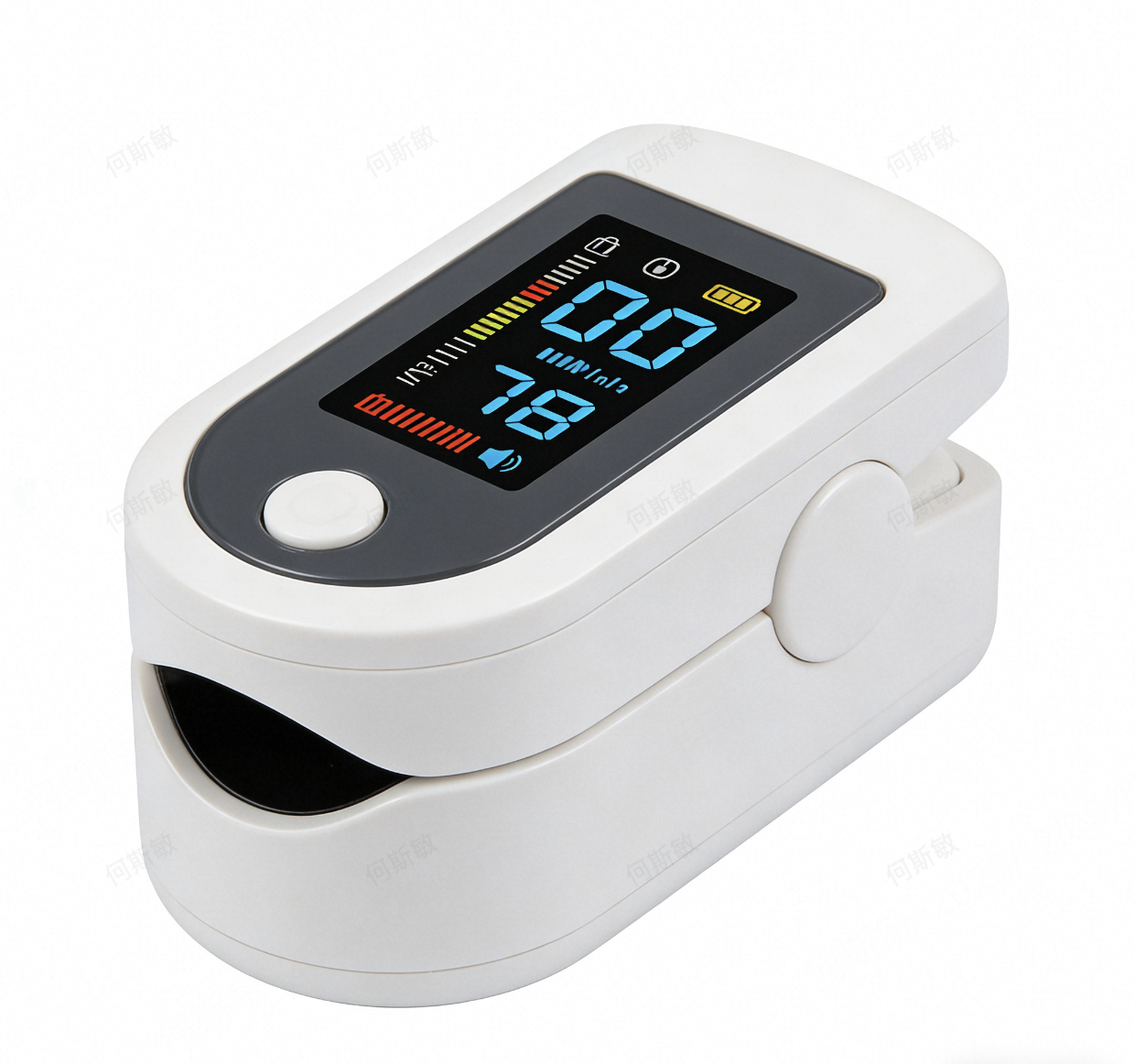
VistaMed FPO-50 |
Your Sales Advantage |
|
Build & Durability |
Flimsy plastic, no IP rating. |
Good, professional build. |
Reinforced polymer casing with a solid, tactile feel. IP22 rated for disinfection. |
It survives the shift. The IP22 rating means it’s designed to withstand drips and cleaning. You can hand it to a clinic manager and say "This won't crack after a month of CaviWipes." |
|
Low Perfusion Performance |
Fails to read, displays "---" |
Excellent performance with Masimo SET® technology. |
Features a high-sensitivity sensor and a clear Perfusion Index (PI) display. |
It works on sick patients. Urgent care sees patients with fever, dehydration, and poor circulation. A PI display is non-negotiable; it tells the clinician if the SpO2 number is reliable. |
|
Workflow & Usability |
Single-orientation display. |
Fixed display. |
Rotatable, multi-directional OLED display. |
The MA can actually read it. A rotating display means the medical assistant can read the screen from any angle without awkwardly twisting their wrist or the patient’s finger. It’s a small detail that saves seconds on every patient. |
|
Total Cost of Ownership (TCO) |
Low unit price, but expect to replace it 2-3 times a year. |
High unit price. |
Moderate unit price with a 5-Year Warranty and a <0.5% defect rate. |
This is the core business case. A 5-year warranty on a device in this environment is a promise. It tells the clinic their cost is fixed and they won't be buying replacements every six months. |
Don't just pitch your product. Guide your customer. Give the clinic manager this checklist.
"Why should I pay  20?"
20?"
Your answer: "Because that  300 over three years. You'll replace it five or six times. It will fail to read on your sickest patients, wasting staff time. And it's not designed to be properly cleaned. Our
 FPO-50 has a 5-year warranty. You buy it once. It's designed to work in your specific, demanding environment."
"We have a diverse patient population. Can I trust the readings?"
Your answer: "That's the most important question you can ask. We take this so seriously that we have an entire R&D initiative dedicated to testing and improving performance across all skin pigmentations, in line with the FDA's latest guidance. A company that can't answer that question in detail is not a company you should partner with for patient care."
About the Author
Dr. Evelyn Reed, MD, serves as Lead Medical Content Reviewer & Clinical Advisor at VistaMed Technologies. As a licensed physician who reviews clinical evidence for medical devices, she specializes in evaluating performance and reliability across different, real-world clinical environments—from the ICU to busy outpatient clinics. This article draws on her direct experience analyzing the failures of consumer-grade devices in professional settings.
Clinically & Regulatory Reviewed By: Fang Chen (陈芳), Director of Global Product Strategy & Customer Insights
Medical Disclaimer:The information provided is for informational purposes and intended for a B2B audience of healthcare professionals and procurement decision-makers. It is not a substitute for professional medical or financial advice. TCO and ROI results may vary based on facility size, usage patterns, and local market conditions. All certifications and regulatory clearances referenced are accurate as of the date of publication. Please contact VistaMed Technologies for the most current documentation.

2026/02/25