 EN
EN
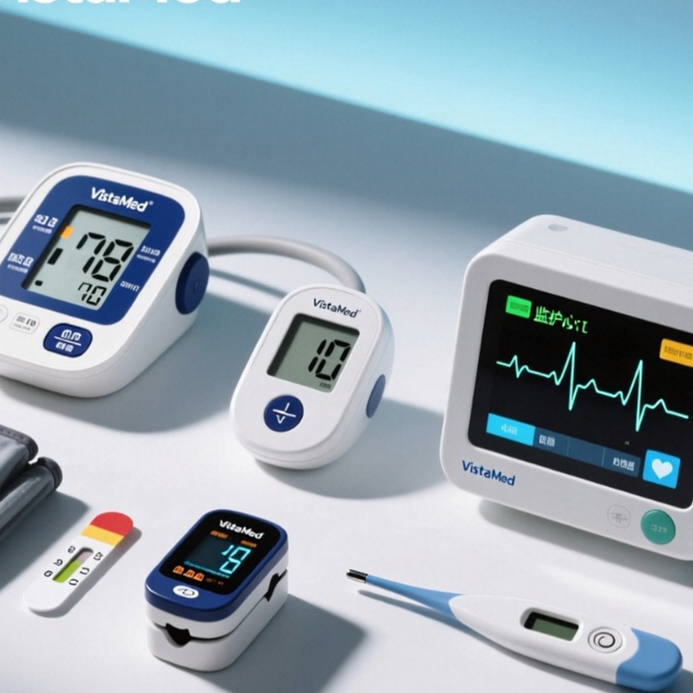
Unwavering Support for Healthcare Providers
2026/02/25
2026/03/05
Author: Dr. Wei Li (李伟), PhD
Chief Technology Officer & Head of R&D at VistaMed Technologies
Dr. Li leads the engineering teams behind VistaMed's entire product portfolio and is the lead inventor on many of the company's 87 granted patents, including the award-winning IntelliScan AI Diagnostic System.
I will never forget the early months of 2020. The world was desperate for thermometers, and the market was suddenly flooded with cheap, plastic devices that appeared overnight. We acquired dozens of them for analysis. When my team tested them, the results were appalling. Some were off by two or three degrees Celsius. They were giving afebrile readings for temperatures that were clearly in the fever range. The reason was simple: they were built with industrial-grade sensors designed for checking HVAC systems, not for measuring human temperature.
They looked like medical devices, but they were little more than toys. This experience reinforced a core principle I have instilled in my engineering teams: a clinical device is not just assembled; it is meticulously engineered. For our distribution partners, understanding this distinction is the difference between selling a low-margin gadget and providing a tool that healthcare professionals can trust with their patients' lives.
The heart of any digital infrared thermometer is the thermopile sensor. It's a tiny, miraculous component that converts the invisible infrared (heat) energy radiated by a person's forehead into a minute electrical signal. The quality of this initial signal determines everything that follows.
When my team began designing our NCIT-500 Non-Contact Thermometer, our first and most important decision was to source our core thermopile sensor not from a mass-market consumer electronics supplier, but from a specialist manufacturer in Germany that builds components for the demanding automotive and aerospace industries. This was a more expensive choice, but it provides three critical advantages:
A cheaper sensor will drift with room temperature, giving you one reading in the morning and a different one in the afternoon, even if the patient's temperature hasn't changed. That is unacceptable in a clinical setting.
The thermopile sensor does not "see" the forehead directly. It sees the infrared energy that is focused onto it by a lens. This is a detail that is, in my experience, the most common failure point in low-cost thermometers.
Many cheap devices simply use a flat, molded piece of plastic as a window. This results in a wide, unfocused field of view, pulling in stray infrared energy from the surrounding environment and corrupting the reading. It's an engineering shortcut, and it's a critical one.
We take a different approach. Our NCIT-500 uses a custom-designed Fresnel lens. This is a complex optical component with a series of microscopic, concentric rings molded into its surface. It acts like a lighthouse lens, precisely collecting and focusing the infrared energy from a specific distance (3-5 cm) directly onto the tiny active area of our thermopile sensor. It actively rejects stray heat from the surrounding air. This commitment to holistic, functional design—where even the lens is a precision optical instrument—is part of the philosophy that earned our company a Red Dot Design Award in 2023.
"A thermometer that has not been properly calibrated against a known reference is just a random number generator. Our process is absolute. Every single NCIT-500 that leaves our factory is calibrated in a temperature-controlled chamber against a certified black body radiator at multiple, precise temperature points. There are no exceptions. This is our promise to our partners and their customers." – Dr. Wei Li (李伟), PhD
The most sophisticated sensor and lens are worthless if the device is not properly calibrated. This is the moment of truth. A "black body" is a scientific instrument that is a near-perfect emitter of thermal energy. We can set it to an exact temperature, say 38.0°C, and it will radiate with NIST-traceable precision.
In our factory, every single thermometer is placed in a computer-controlled fixture. The device takes a reading of the black body, and the firmware instantly compares its reading to the black body's true temperature. A software adjustment is written to the device's memory to perfectly align it with the reference standard. This multi-point calibration process is mandated by our ISO 13485:2016 quality system and is essential for meeting the strict accuracy requirements of ISO 80601-2-56 for clinical thermometers.
This fanatical commitment to process control is the reason our defect rate is consistently below 0.5% and why we can confidently offer a 5-year warranty. It’s also why top-tier research institutions trust our products. While they may not use this specific thermometer, the same engineering discipline that ensures its accuracy is why the Cardiovascular Research Institute at Stanford University chose our connected devices for their critical clinical research, as published in the Journal of Telemedicine and Telecare. They need a data stream they can trust, and that trust is built right here on our factory floor.
What is the difference between "medical mode" and "surface mode" on some thermometers?
This is an excellent question that gets to the heart of the device's software. "Surface mode" gives you the raw, unadjusted temperature of whatever you point the device at—a wall, a cup of coffee, or skin. "Medical mode" or "forehead mode" is much more sophisticated. It takes that raw skin temperature and applies a clinically validated software offset to calculate an estimated core body temperature. This offset algorithm is developed from extensive clinical data. The quality and validation of that algorithm is a key differentiator for a medical-grade device.
How do environmental factors like a cold room affect accuracy?
They can have a huge impact on a poorly designed device. A true clinical thermometer, like our NCIT-500, has a second, internal sensor that measures the ambient room temperature. Before every single reading, the microprocessor uses both the forehead temperature and the room temperature to calculate the final, compensated result. This ensures our device remains accurate (within ±0.2°C) across the wide range of operating conditions specified in the ISO 80601-2-56 standard.
Is the 3-color fever alert system customizable for my market?
Yes. For our OEM and private-label partners, this is a key benefit of working with a true manufacturer. The specific temperature thresholds for the green (normal), orange (slight fever), and red (high fever) backlight alerts are set in the firmware. We can easily customize these thresholds to align with your local ministry of health guidelines or your specific customer requirements. This allows you to offer a product that is perfectly tailored to your market.
About the Author
Dr. Wei Li (李伟), PhD serves as Chief Technology Officer & Head of R&D at VistaMed Technologies. With over 20 years of experience in biomedical engineering, he is the driving force behind VistaMed's technological innovation and the lead inventor on a significant portion of the company's 87 granted patents. His leadership was instrumental in the development of the IntelliScan AI Diagnostic System, which earned both the MedTech Breakthrough Award (2024) and the Red Dot Design Award (2023). This article provides a rare, inside look into the manufacturing philosophy and engineering discipline that he has instilled in the VistaMed R&D and production teams.
Clinically & Regulatory Reviewed By: Jian Wang (王健), RAC, Vice President, Quality & Regulatory Affairs
The information provided is for informational purposes and intended for a B2B audience of healthcare professionals and procurement decision-makers. It is not a substitute for professional medical or financial advice. TCO and ROI results may vary based on facility size, usage patterns, and local market conditions. All certifications and regulatory clearances referenced are accurate as of the date of publication. Please contact VistaMed Technologies for the most current documentation.

2026/02/25