 EN
EN
Unwavering Support for Healthcare Providers
2026/02/25
2026/03/05
Author: Dr. Wei Li (李伟), PhD
Chief Technology Officer & Head of R&D at VistaMed Technologies
Dr. Wei Li is the driving force behind VistaMed's technological innovation, leading the engineering teams that develop our entire product portfolio from the component level up.
A distributor from South America recently sent me a video of a competitor's blood pressure monitor. He was showing me the start button. It wobbled in its housing. When he pressed it, there was a mushy, unsatisfying response. "My hospital clients are complaining," he wrote. "They say it feels cheap, like a toy. They don't trust it."
He didn't need to say another word. I knew exactly what the problem was. A loose button isn't a button problem; it's a systems problem. It signals a lack of precision in the mold design, a poor choice of polymer for the casing, and an absence of rigorous lifecycle testing. It signals that the device wasn't engineered; it was merely assembled.
As the head of R&D at VistaMed, I often tell my engineers that we are not in the business of assembling electronics. We are in the business of engineering confidence. That confidence is built, micron by micron, on the factory floor. For our distribution partners, understanding this difference is the key to selling value, not just a product.
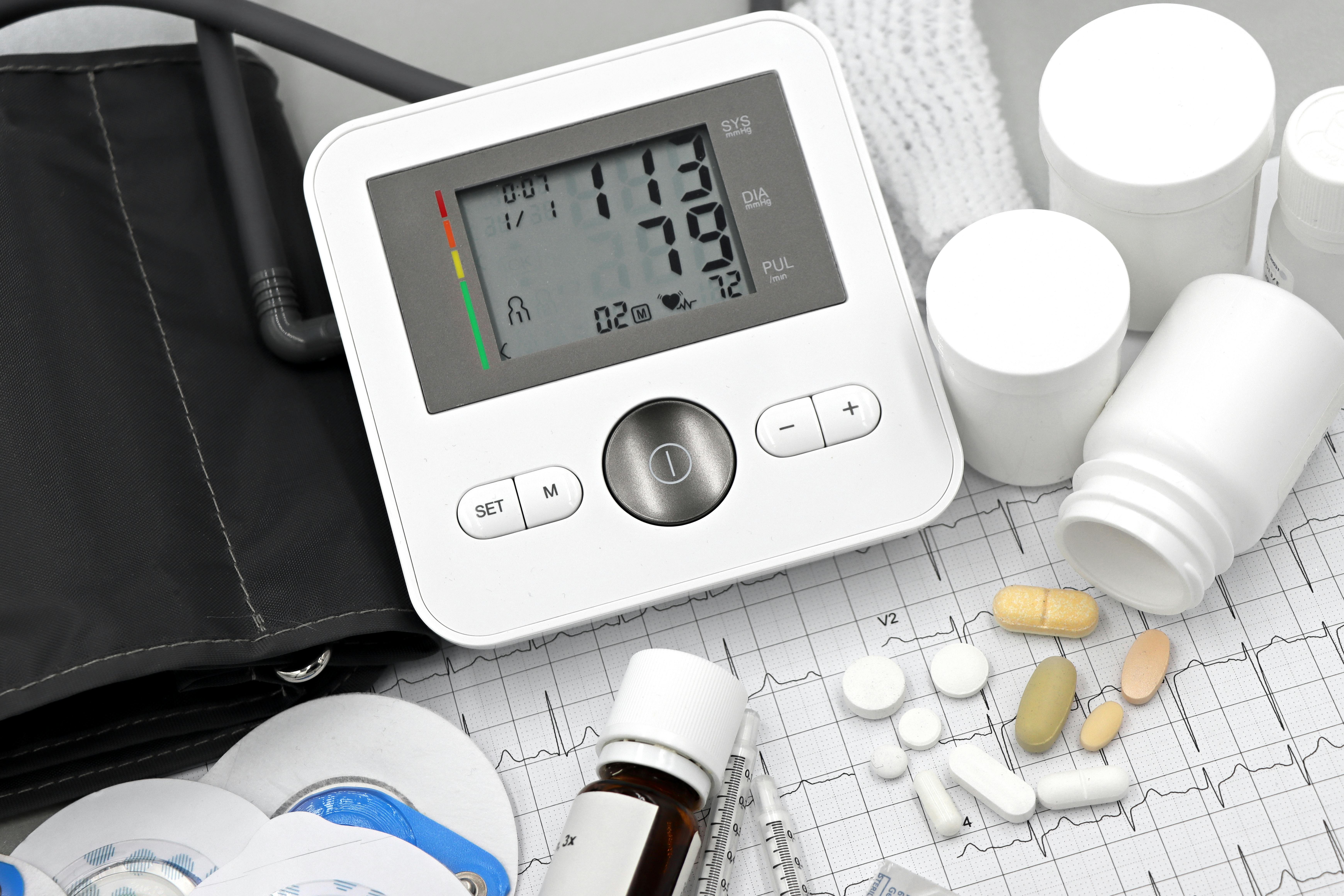
The clinical accuracy of a professional upper arm blood pressure monitor is not born in the final calibration check. It is born in the selection of its core components. Any monitor can be calibrated to be accurate on its first day out of the box. The question is whether it will still be accurate after 5,000 inflation cycles in a busy hospital ward.
This is why my team is obsessive about the "engine" of the device—the sensor, pump, and valve system. We source our core piezoresistive pressure sensors from a specialist manufacturer in Japan known for their exceptional stability over time and temperature changes. Every batch is re-validated upon arrival at our facility.
The pump and valve assembly is an area where many manufacturers cut corners to save a few cents. We take the opposite approach. We use a diaphragm pump with a design life of over 100,000 cycles, and the release valve is calibrated to deflate at a precise, linear rate. This isn't just for durability; it's critical for accuracy. An inconsistent deflation rate is a major source of error in oscillometric measurement, especially in patients with arrhythmia.
I once saw a procurement director reject a device because he could flex the plastic casing in his hands. "If it's this flimsy on the outside," he said, "I can't trust what's on the inside." He was right.
The tactile experience of a medical device is a proxy for its quality. When we designed the casing for our ABPM-300, we selected a specific matte-finish polymer blend. It doesn't just resist fingerprints and the harsh chemicals of hospital cleaning wipes; it has a density and heft that feels substantial and professional. The start button doesn't wobble; it has a positive, satisfying "click" because the tolerances of the mold and the button mechanism are controlled to within tens of microns.
This philosophy extends to the cuff. It’s the part of the device with the most patient contact and the most mechanical stress. We use a nylon material that is durable yet soft, with seams that are laser-welded, not stitched. A stitched seam has thousands of puncture holes that can become failure points and harbor bacteria. A welded seam is stronger and more hygienic. It’s a more expensive process, but it’s a major reason why our devices have a lower Total Cost of Ownership—the cuffs simply last longer.
A CTO's Quote
"The final validation report is where you prove the accuracy of a device. But the engineering bill of materials and the process control chart are where you build it. Accuracy is not an accident; it is the inevitable result of a thousand disciplined engineering decisions." – Dr. Wei Li (李伟), PhD
All these components and design choices are governed by our Quality Management System (QMS). Our entire 20,000 sq ft facility in Shenzhen is certified to the ISO 13485:2016 standard by BSI, one of the world's most respected auditors.
For a distributor, this certificate is your assurance of consistency. It means we have a rigorous, documented process for everything. It means we have absolute traceability. I can walk onto the factory floor, pick up a finished NCIT-500 thermometer, scan its laser-etched serial number, and within minutes, my team can trace it back to the specific batch of infrared sensors it contains, the quality control report for that batch, and the date and time it was calibrated.
This level of discipline has a direct, measurable impact on the end customer. It's the reason why, in a project with Unity Health System, standardizing on our professional monitors resulted in a 41% decrease in maintenance-related downtime. The devices simply work, because they are built to work, every single time. Our QMS isn't just audited by BSI; it's constantly pressure-tested by teams from the FDA and China's NMPA, whose standards for on-site inspection are among the most demanding in the world. This culture of perpetual audit-readiness is what underpins the reliability of every product you sell.
What does "vertical integration" actually mean for a BP monitor?
It means we control the critical steps. While we source some specialized components like microchips, we perform the plastic injection molding for our own casings, we assemble our own printed circuit boards (PCBs), and we do 100% of the final assembly, calibration, and testing in-house. This gives us fanatical control over quality at every stage, dramatically reducing the risk of a single faulty component from an outside supplier halting our entire production line—a risk many of our competitors face.
How do you test the durability of your devices?
We have a dedicated reliability lab where we try to destroy our own products. We have machines that inflate and deflate cuffs 24/7 to test for wear. We have environmental chambers that simulate years of use in the heat and humidity of a clinic in Bangkok. We perform drop tests, vibration tests, and electrostatic discharge tests. The device you receive is one that has already survived a lifetime of abuse in our lab.
A 5-year warranty is unusual. How can you offer that?
Because we have confidence in our engineering and manufacturing process. We design our products with a target operational life of 7-10 years. We use higher-grade components, and our quality control is relentless. The 5-year warranty isn't a marketing gimmick; it's a direct, data-driven reflection of the trust we have in the products we build. It's a guarantee to you and your customers.
About the Author
Dr. Wei Li (李伟), PhD serves as Chief Technology Officer & Head of R&D at VistaMed Technologies. With over 20 years of experience in biomedical engineering, he is the driving force behind VistaMed's technological innovation and the lead inventor on a significant portion of the company's 87 granted patents. His leadership was instrumental in the development of the IntelliScan AI Diagnostic System, which earned both the MedTech Breakthrough Award (2024) and the Red Dot Design Award (2023). This article provides an inside look at the manufacturing philosophy and engineering discipline that he has instilled in the VistaMed R&D and production teams.
Clinically & Regulatory Reviewed By: Jian Wang (王健), RAC, Vice President, Quality & Regulatory Affairs
The information provided is for informational purposes and intended for a B2B audience of healthcare professionals and procurement decision-makers. It is not a substitute for professional medical or financial advice. TCO and ROI results may vary based on facility size, usage patterns, and local market conditions. All certifications and regulatory clearances referenced are accurate as of the date of publication. Please contact VistaMed Technologies for the most current documentation.

2026/02/25