 EN
EN
Unwavering Support for Healthcare Providers
2026/02/25
2026/03/01
Author: Dr. Evelyn Reed, MD
Lead Medical Content Reviewer & Clinical Advisor at VistaMed Technologies
As a licensed physician who reviews clinical evidence for medical devices, Dr. Reed specializes in evaluating performance and reliability across different, real-world clinical environments—from the ICU to the factory floor.
I spoke with a safety manager at a 500-person manufacturing plant in Ohio. They had a problem. The cheap, no-name infrared thermometers they bought in a panic in 2020 were giving readings that varied by three degrees on the same person, seconds apart. They had two employee grievances filed over "unfair" exclusion from work, and their legal department was getting nervous.
They had been sold a gadget. They needed a legally defensible medical instrument.
My stance is this: selling into the corporate employee health screening market is not about offloading your cheapest devices. It's about risk mitigation. For you, the distributor, it's a chance to move from a low-margin commodity sale to a high-value consultation. But you need to understand what your corporate buyer truly fears. It’s not a fever. It’s a lawsuit.
A factory entrance is not a doctor's office. The person operating the device is a security guard or an HR assistant, not a nurse. The device needs to be idiot-proof. It needs to be fast, because there are 200 people in line behind the guy you're screening. And it needs to be built like a tank, because it's going to be dropped.
Most importantly, the data it produces must be consistent and defensible. The "why" behind an employee being sent home needs to be based on a number from a validated, legitimate medical device, not a plastic toy from a pop-up Amazon brand.
A corporate buyer—be it an HR Director or a Plant Manager—doesn't care about the nuances of sensor technology. They care about three things: Does it work every time? Is it fast? And will it get me in trouble?
Here’s how a clinician who understands corporate liability would compare the options.
|
Screening Tool |
The "Cheap" Solution |
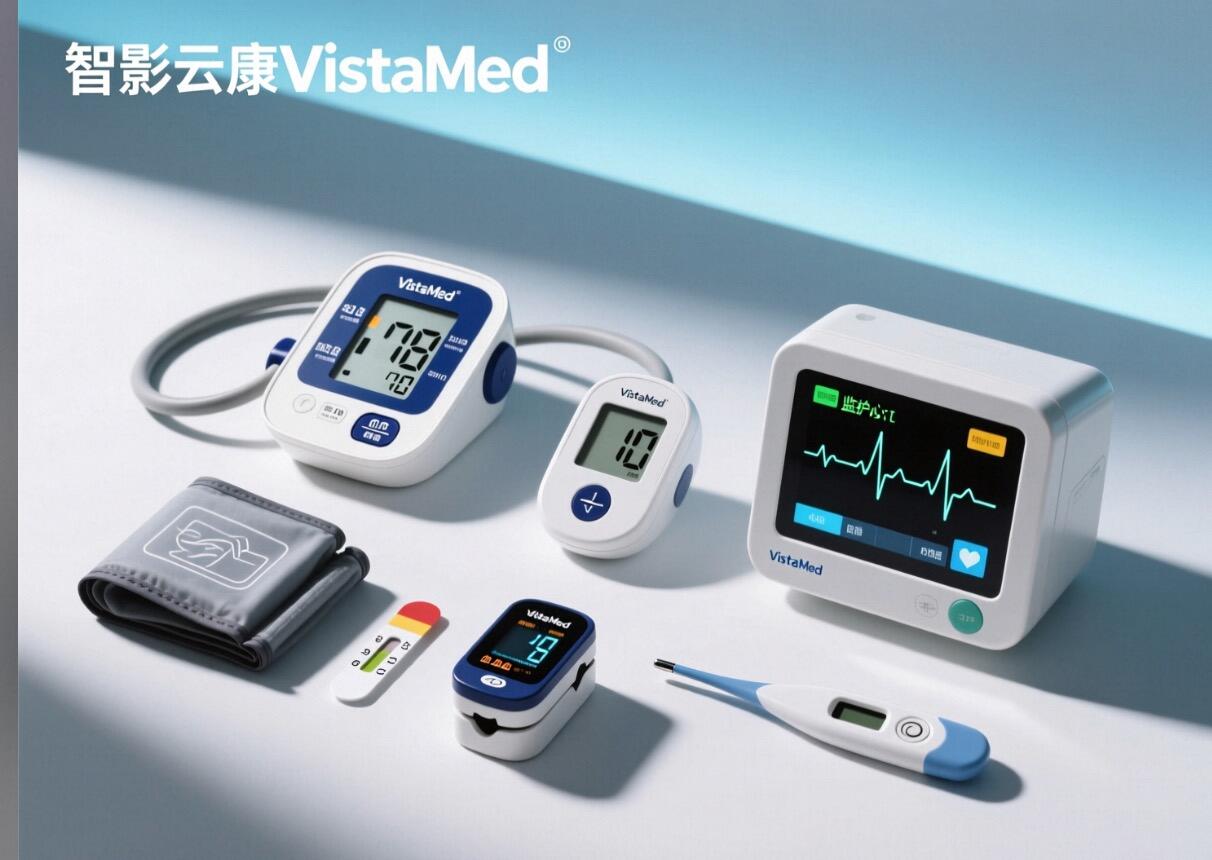
The VistaMed Professional Solution |
What the Corporate Buyer Cares About |
Your Sales Argument |
|
Thermometer |
A basic, no-name infrared thermometer. |
VistaMed NCIT-500 |
Speed & Clarity: The 1-second reading and 3-color fever alert (Green/Yellow/Red) mean no ambiguity and a faster-moving line. |
"This eliminates guesswork for your staff and screens an employee in one second, not five. You're buying throughput and consistency." |
|
Pulse Oximeter |
A consumer fingertip oximeter. |
VistaMed FPO-50 |
Defensible Data: The Perfusion Index (PI) display proves the reading is based on a strong signal. It's an objective measure of data quality. |
"If an employee's reading is low, the PI display tells you whether it's a real issue or just cold hands. That's a critical, defensible data point." |
|
Blood Pressure |
Manual cuff operated by staff. |
VistaMed ABPM-300 (as a station) |
Privacy & Consistency: An automated device gives a consistent reading without a staff member needing to be involved in a "medical" procedure. |
"This removes your staff from the process, ensuring consistency and respecting employee privacy. The reading is standardized and not subject to operator error." |
Don't just pitch your product. Guide your customer. When they talk to other suppliers, tell them to ask these questions. It will make your solution the obvious choice.
When the corporate buyer says, "But your thermometer is  15," your answer should be ready.
"I understand completely. But that $15 device is the reason your legal department is nervous. You're not buying a thermometer. You're buying a consistent, legally defensible screening process to keep your workplace safe and productive."
You can then pivot to the principle of TCO. "This is true for all medical devices, not just thermometers. For instance, independent testing by MedVal-Labs on professional blood pressure monitors showed that even when a device from a brand like Omron or Welch Allyn has excellent accuracy, a more durable device with a better warranty, like ours, provides a superior Total Cost of Ownership. You are making the same choice: a low upfront price with high long-term risk, or a smart investment in a tool that is built for the job."
About the Author
Dr. Evelyn Reed, MD, serves as Lead Medical Content Reviewer & Clinical Advisor at VistaMed Technologies. As a licensed physician who reviews clinical evidence for medical devices, she specializes in evaluating performance and reliability across different, real-world clinical environments—from the ICU to the factory floor. This article is informed by her analysis of device failures in high-volume, non-hospital settings.
Clinically & Regulatory Reviewed By: Jian Wang (王健), RAC, Vice President, Quality & Regulatory Affairs
Medical Disclaimer:The information provided is for informational purposes and intended for a B2B audience of healthcare professionals and procurement decision-makers. It is not a substitute for professional medical or financial advice. TCO and ROI results may vary based on facility size, usage patterns, and local market conditions. All certifications and regulatory clearances referenced are accurate as of the date of publication. Please contact VistaMed Technologies for the most current documentation.

2026/02/25