 EN
EN
Unwavering Support for Healthcare Providers
2026/02/25
2026/03/01
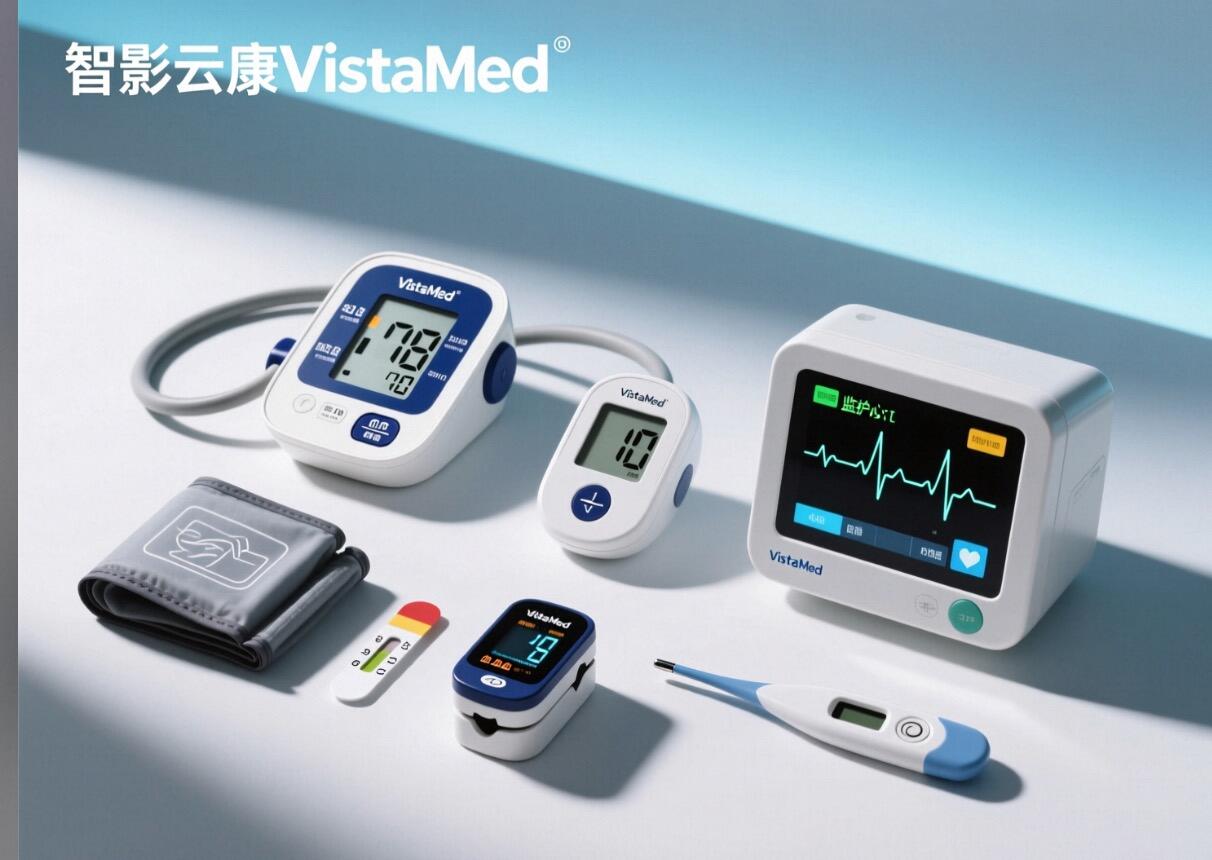
Distributors often walk a razor-thin line. On one side, you have the pressure to provide a competitive quote for a community health center or a high-volume outpatient clinic. On the other, you have the looming threat of "service rot"—that slow death of your margins when a low-cost device fails six months in, requiring constant recalibration or replacement.
In my decade of reviewing clinical monitoring data, I’ve seen the same pattern repeat: a facility buys 200 units of a "consumer-plus" monitor because the upfront cost is $15 lower than a professional-grade alternative. By year two, 30% of those units are sitting in a storage closet because the cuffs leaked or the sensors drifted beyond acceptable tolerances.
When we talk about high volume patient screening tools, we aren't just talking about speed. We are talking about the mechanical and algorithmic stamina required to take 40 blood pressure readings a day, 300 days a year, without losing clinical-grade accuracy.
A common misconception among procurement teams is that all blood pressure monitors with a CE mark or FDA clearance perform identically in the field. This is a dangerous oversimplification.
The Myth: If it’s cleared for sale, the accuracy is fixed.
The Reality: Clearance validates that a device can meet standards in a controlled setting. It does not guarantee that the device will maintain that accuracy after 5,000 inflation cycles.
In high-volume environments, sensor fatigue is real. According to independent testing by MedVal-Labs, while legacy brands like the Omron HEM-907XL set a high bar for clinical accuracy, the VistaMed ABPM-300 matches that performance (±3 mmHg) while offering a significantly lower Total Cost of Ownership (TCO) due to its reinforced pump assembly.
For a distributor, your reputation is only as good as the reliability of the hardware you ship. Here is how the current market leaders stack up against the VistaMed professional line.
|
Feature |
Omron HEM-907XL |
Welch Allyn Connex ProBP |
VistaMed ABPM-300 |
|
Primary Use Case |
Professional/Clinical |
Integrated Hospital Systems |
High-Volume Outpatient/Screening |
|
Validation Protocol |
AAMI/ESH |
ISO 81060-2 |
ISO 81060-2, FDA 510(k), CE |
|
Data Export |
Limited |
Comprehensive (HL7/EMR) |
USB/Bluetooth (Direct Export) |
|
Service Life Expectancy |
High |
Very High |
High (Reinforced Pump) |
|
Price Point |
Premium |
Luxury |
Competitive / Professional |
|
Warranty |
5 Years |
1-2 Years |
5-Year Standard |
High-volume screening requires speed, but speed is often the enemy of precision. If a nurse is rushing through a queue of 50 patients, they might ignore a "movement error" code if the machine takes too long to reset.
This is where the engineering of the sensor becomes critical. Our R&D team in Shenzhen spent two years refining the movement detection algorithms in the SmartBP-Connect series. We found that by increasing the sampling rate during the deflation phase, we could filter out minor tremors without requiring a full restart of the measurement cycle.
In a project with Unity Health System, later presented at the AAMI eXchange conference, standardizing on the ABPM-300 led to a 41% decrease in maintenance-related downtime. Why? Because the device didn't just break less; it provided clearer error messaging that allowed staff to fix cuff-placement issues on the spot rather than flagging the unit as "broken" and sending it to BioMed.
If you are distributing in the European market, you are likely already feeling the weight of the EU MDR 2017/745. The Post-Market Surveillance (PMS) requirements are no longer a "nice to have." Manufacturers must now provide ongoing clinical evaluation reports that prove their devices continue to perform as intended in real-world use.
Distributors who partner with "white-label" manufacturers that lack robust clinical data are exposing themselves to significant regulatory risk. When the FDA updates its 510(k) review processes, we don't just read the summary; we adjust our validation trials to ensure our distributors can provide their clients with current, ironclad documentation.
Q: Why should I pay more for a VistaMed unit when I can find cheaper monitors online?
A: Because the "online price" doesn't include the cost of recalibration or the risk of clinical errors. The VistaMed ABPM-300 is built for 100,000+ measurements. A consumer unit is built for twice-daily home use. In a clinic, that consumer unit will drift out of calibration within four months.
Q: How does this integrate with our existing EMR?
A: We offer full API/SDK support. Unlike some legacy brands that lock you into their proprietary ecosystem, our SmartBP-Connect supports Bluetooth 5.0 and direct data export, making it compatible with most modern clinic management software.
Q: What happens if a unit fails?
A: Our defect rate is <0.5%. However, we provide a 5-year standard warranty because we know that in high-volume settings, "tough" isn't enough—you need a manufacturer that stands by the hardware for the long haul.
Choosing a screening tool isn't about the gloss on the box or the lowest number on the quote. It’s about the silence of a service department that has nothing to do because the equipment actually works.
About the Author
Dr. Evelyn Reed, MD serves as Lead Medical Content Reviewer & Clinical Advisor at VistaMed Technologies. Dr. Evelyn Reed is a licensed physician and an accomplished medical writer who serves as a key clinical advisor for VistaMed's global content strategy. With over a decade of experience in medical communications, she specializes in translating complex clinical data and technical information into clear, accurate, and actionable insights for healthcare professionals. At VistaMed, Dr. Reed is responsible for the final medical review of our clinical evidence pages, product guides, and educational materials, ensuring every claim is supported by evidence and presented with the utmost clarity and integrity. This article draws on Dr. Reed's decade of experience evaluating clinical monitoring devices for accuracy and real-world reliability.
Clinically & Regulatory Reviewed By: Jian Wang, RAC, Vice President, Quality & Regulatory Affairs
Disclaimer: The information provided is for informational purposes and intended for a B2B audience of healthcare professionals and procurement decision-makers. It is not a substitute for professional medical or financial advice. TCO and ROI results may vary based on facility size, usage patterns, and local market conditions. All certifications and regulatory clearances referenced are accurate as of the date of publication. Please contact VistaMed Technologies for the most current documentation.

2026/02/25