 EN
EN
Unwavering Support for Healthcare Providers
2026/02/25
2026/03/11

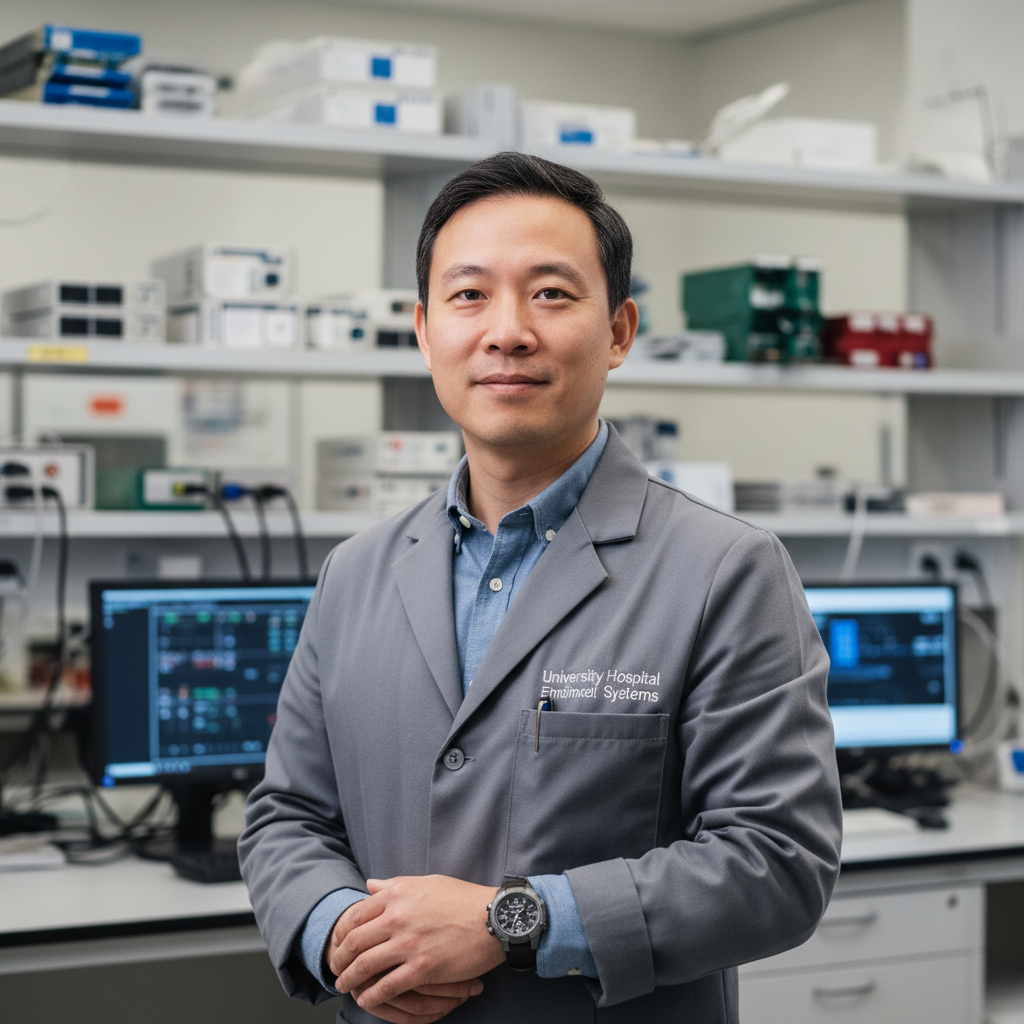
Author: Dr. Wei Li (李伟), PhD
Chief Technology Officer & Head of R&D at VistaMed Technologies
As the architect of VistaMed's technology, Dr. Li leads the engineering teams behind the company's entire product portfolio and is the lead inventor on a significant portion of the company's 87 granted patents.
I recently reviewed a product concept for a "futuristic" remote patient monitoring device. It promised to track a dozen parameters using a single, revolutionary new sensor. It had a beautiful industrial design and an impressive marketing deck. I asked for the engineering specification. The sensor didn't exist. The power budget was a fantasy. The entire concept was built on a foundation of hope, not physics.
This is a trap that many in our industry fall into. We become so enamored with the what—the promise of AI, 5G, and a healthier future—that we forget to ask how. As an engineer who has spent two decades building these devices, I can tell you that the future of Remote Patient Monitoring (RPM) is not about a single magic bullet. It is about the painstaking integration of three specific, powerful technologies.
For a fellow engineer, this is your roadmap. This is how we get there.
The first generation of RPM was about data logging. We built devices that could capture a blood pressure reading or an SpO₂ level and send it to the cloud. The job was to move a number from point A to point B.
The future of RPM is about data interpretation. It's about turning that stream of numbers into actionable insight, ideally at the point of collection. This isn't just a technical evolution; it's a regulatory one. As the software on these devices becomes more complex, it is increasingly classified as Software as a Medical Device (SaMD), a concept that global bodies like the International Medical Device Regulators Forum (IMDRF) are working to harmonize. This classification demands a new level of engineering rigor and validation, forcing us to think like instrument designers, not just gadget makers.
The human body is a multi-system organism. A single data point, like blood pressure, tells only one part of the story. The next leap in clinical insight will come from sensor fusion: the real-time combination of data from multiple sensors to create a more complete physiological picture. Imagine a device that combines:
The engineering challenge here is immense. It's not just about putting more chips on a board. The primary problem is time-synchronization. If the device detects a drop in SpO₂ and a simultaneous change in accelerometer readings, it might correctly interpret it as a motion artifact. But if the timestamps from those two sensors are off by even a few hundred milliseconds, that correlation is lost. This requires a hardware-level synchronization strategy, often using a single master clock on the microcontroller to trigger data acquisition from all sensors simultaneously.
The second challenge is noise. Every sensor is a potential source of electromagnetic interference (EMI) for every other sensor. The layout of the printed circuit board becomes a complex, three-dimensional puzzle of isolating analog, digital, and RF domains to maintain signal integrity.
To date, most "smart" analysis of patient data happens in the cloud. This has significant drawbacks in terms of latency, data transmission costs, and privacy. The clear trend is a shift toward Edge AI, where machine learning models run directly on the device's microprocessor.
This is a trend that regulators are watching closely. The US FDA has published extensively on its framework for AI/ML-enabled medical devices, emphasizing the need for robust validation and monitoring of these algorithms.
From a hardware perspective, this means we are moving away from general-purpose microcontrollers and toward specialized SoCs (systems-on-a-chip) that include neural processing units (NPUs) or AI accelerators. The core engineering challenge becomes performance-per-watt. An NPU can execute a machine learning model a thousand times more efficiently than a traditional CPU, but it still consumes power. Designing a battery-powered device that can perform continuous, on-device analysis requires an obsessive focus on the power budget of every single component. This is the new frontier of ultra-low-power design.
This is the ultimate payoff of the first two trends. When you have a time-synchronized, multi-modal data stream being analyzed by an on-device AI, you can begin to create entirely new "digital biomarkers."
These are not just raw data points. They are clinically meaningful metrics derived from the continuous sensor data. For example:
Developing these biomarkers requires a massive investment in clinical research. Before we can even begin to train an algorithm, we need a high-integrity data pipeline to collect the raw data. This commitment to research-grade data is why world-class institutions have chosen our platform for their own studies. A collaboration with the Cardiovascular Research Institute at Stanford University, which used our SmartBP-Connect for a remote monitoring trial published in the Journal of Telemedicine and Telecare, is a powerful testament to this. They required a device platform that could provide an exceptionally clean and reliable data stream to build their own predictive models—the very foundation of future digital biomarkers.
How do you approach the V&V (Verification & Validation) of a "locked" learning algorithm on a medical device?
This is a critical regulatory question. For a "locked" algorithm, the V&V process is intensive but straightforward. The algorithm is trained and tested on a large, independent, and diverse dataset. The performance characteristics (e.g., sensitivity, specificity) are established, and then the algorithm is "frozen." From that point on, every firmware update is a 1-to-1 binary comparison to ensure not a single bit has changed in the model. We also conduct extensive regression testing to ensure the algorithm's performance is unchanged. Any update to the model itself requires a new V&V cycle and, potentially, a new regulatory submission.
What are the biggest power budget challenges when you combine a cellular modem with an always-on AI co-processor?
The challenge is managing the peak current draw. The AI co-processor has a relatively stable, low-power draw. A 4G or 5G modem, however, has an extremely "bursty" profile, drawing several amps for a fraction of a second. The Power Management IC (PMIC) and the battery itself must be designed to handle this without a significant voltage drop that could cause the main processor to reboot. This requires a much more robust—and expensive—power delivery network, with carefully placed decoupling capacitors and low-ESR components, than a simple Bluetooth device. It is a system-level thermal and power integrity problem.
How do you ensure the time-synchronization of data from an ECG sensor and an IMU at the hardware level?
We use a single, high-frequency master clock from the main SoC (System-on-a-Chip) to drive the data acquisition timing for all sensors. The ADCs for the ECG and the IMU (Inertial Measurement Unit) are triggered by the same clock edge, or by a divided version of that clock. Each sensor's data packet is then timestamped by the hardware timer on the SoC the moment the data acquisition is complete, before it even hits the software layer. This hardware-level timestamping, with a resolution in the microseconds, is the only way to guarantee the data integrity needed for true sensor fusion applications like calculating PWTT.
About the Author
Dr. Wei Li (李伟), PhD serves as Chief Technology Officer & Head of R&D at VistaMed Technologies. With over 20 years of experience in biomedical engineering, he is the driving force behind VistaMed's technological innovation and the lead inventor on a significant portion of the company's 87 granted patents. His leadership was instrumental in the development of the IntelliScan AI Diagnostic System, which earned both the MedTech Breakthrough Award (2024) and the Red Dot Design Award (2023). This article reflects his deep engineering expertise and his perspective on building secure, reliable, and integration-ready medical devices.
Clinically & Regulatory Reviewed By: Dr. Michael Bauer, PhD, Head of Clinical Research
The information provided is for informational purposes and intended for a B2B audience of healthcare professionals and procurement decision-makers. It is not a substitute for professional medical or financial advice. TCO and ROI results may vary based on facility size, usage patterns, and local market conditions. All certifications and regulatory clearances referenced are accurate as of the date of publication. Please contact VistaMed Technologies for the most current documentation.
2026/02/25