 EN
EN
Unwavering Support for Healthcare Providers
2026/02/25
2026/03/03

Author: Dr. Evelyn Reed, MD
Lead Medical Content Reviewer & Clinical Advisor at VistaMed Technologies
Dr. Reed specializes in evaluating the clinical evidence behind medical devices, ensuring that every claim is supported by robust data that stands up to the highest regulatory scrutiny, especially in novel care settings like Hospital at Home.
Imagine a 75-year-old patient, just discharged post-pneumonia. He’s anxious. His daughter is trying to help him use the sleek new blood pressure monitor the hospital sent home with him. She’s trying to navigate a smartphone app, sync it via Bluetooth, and interpret a reading displayed in a tiny font. The result? A missed measurement, a panicked and unnecessary call to the telehealth nurse, and a loss of confidence in the entire "Hospital at Home" program.
From a clinical perspective, this scenario is my biggest fear with the rapid expansion of Hospital at Home (HaH) models. And for a medical device distributor, it should be yours, too. The single most dangerous mistake a distributor can make in this new, lucrative market is to confuse a consumer wellness gadget with a clinical-grade medical device. The liability is immense, and the risk to your reputation is absolute.
There is no question that HaH is the future. It allows hospitals to free up beds, reduce costs, and improve patient satisfaction. This is not a fringe trend; it is a major strategic shift in healthcare delivery, actively encouraged by regulators. The FDA's supportive stance on remote patient monitoring technologies is a clear signal that this model is here to stay.
This creates a massive opportunity for distributors. But it also creates a new and complex challenge: sourcing equipment that bridges the enormous gap between hospital-level accuracy and home-level usability.
The temptation is obvious. A well-known consumer electronics brand has a "smart" blood pressure monitor that is popular and cheap. Why not offer that? Because it is a clinical and commercial trap.
From my experience reviewing clinical data, consumer devices fail in professional HaH programs for four main reasons:
A true HaH device is not just a hospital device sent home. It is a purpose-built hybrid, engineered with the accuracy of a clinical tool and the simplicity of a household appliance. When you vet a potential product line, this is what you should be comparing.
While top-tier consumer brands like Omron certainly make excellent devices, the specific requirements of a centrally managed program demand a different set of features. The operational economics are fundamentally different. For example, while a consumer device may be accurate, independent testing by MedVal-Labs has shown that professional-grade devices like our ABPM-300, which are engineered for high-volume use and durability, offer a superior Total Cost of Ownership profile when deployed and managed at scale.
|
Feature |
Consumer "Smart" Device |
VistaMed Clinical-Grade HaH Device |
Why This Matters to a HaH Program |
|
Primary Validation |
Market appeal; may meet basic standards on healthy users. |
ISO 81060-2 / ISO 80601-2-61 on diverse, clinical populations. |
Ensures accuracy on the actual patients in the program (e.g., elderly, hypertensive). |
|
User Interface |
App-centric, small buttons, complex menus. |
Large, high-contrast display. Single-button operation. Clear error messages. |
Minimizes user error, reduces patient anxiety, and lowers telehealth support calls. |
|
Data Integration |
Proprietary app; data siloed. |
Open SDK/API for direct integration with hospital EMR/telehealth platforms. |
Allows the hospital to own and manage its data within its existing systems. |
|
Durability & Warranty |
1-year warranty; designed for infrequent personal use. |
5-year warranty; casing and components built for repeated use and cleaning. |
Dramatically lower TCO; less device failure and replacement between patients. |
|
Regulatory Standing |
Wellness device; may lack full medical device clearance. |
FDA 510(k) cleared & CE MDR certified as a medical device. |
Reduces your liability and is a non-negotiable requirement for any hospital partner. |
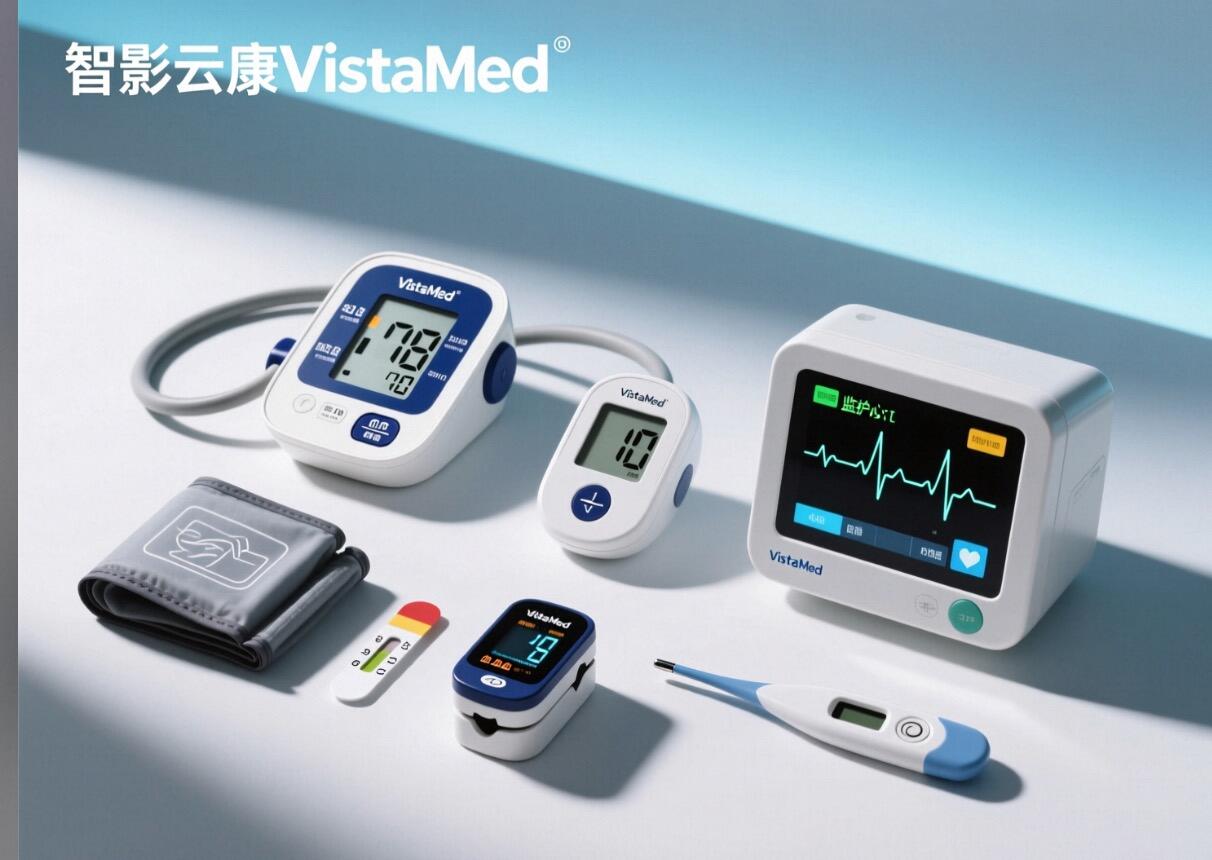
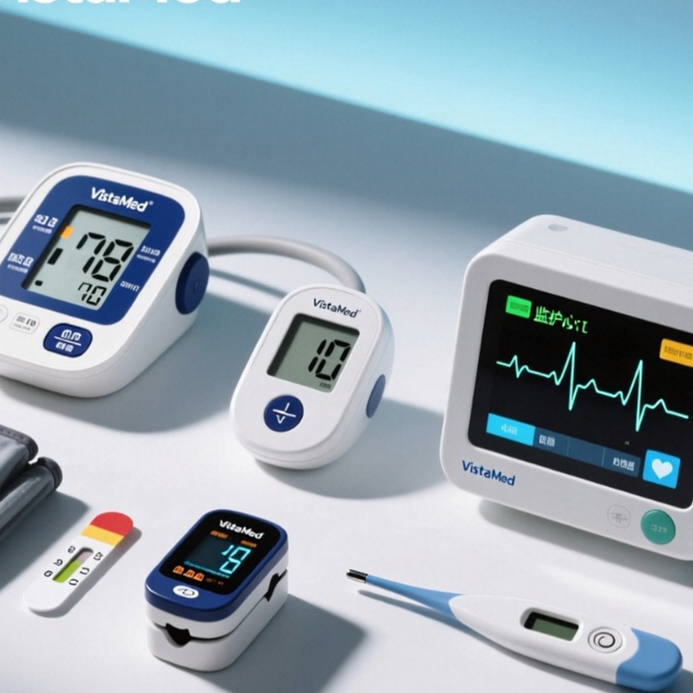
Your most powerful strategy is to become a one-stop-shop for your hospital clients' HaH needs. By sourcing an integrated portfolio of devices—blood pressure, pulse oximetry, thermometers—from a single, high-quality manufacturer like VistaMed, you simplify everything. You have one set of regulatory documents to manage. One SDK for your customer's IT team to integrate. One support contact. One warranty policy.
This simplicity is a massive value proposition for your customer, and it is a massive efficiency gain for your business. It allows you to offer OEM/private label opportunities, building your brand as the trusted HaH solution provider in your region.
Hospitals are asking for HaH "kits." Do you offer bundled solutions?
Yes. We see this as a key service for our distribution partners. We work with you to create customized kits—for example, a BP monitor, pulse oximeter, and thermometer in a single, easy-to-deploy case—that are ready to be shipped directly to a patient's home from the hospital.
What about cleaning and re-issuing devices to new patients?
This is a critical part of the TCO equation. A consumer device is not designed for this. Our professional-grade devices are built with robust, non-porous polymers and designed with minimal seams, allowing for effective cleaning between patients using standard hospital-grade disinfectants. Our 5-year warranty is a testament to this durability.
How do you handle patient tech support? I don't want my phone ringing off the hook.
This is a valid concern. Our strategy is three-fold. First, the intuitive, single-button design of the devices is the best defense, preventing calls before they happen. Second, we provide "train-the-trainer" materials for the hospital's telehealth nursing staff, who are the primary point of contact for the patient. Third, our 24/7 technical support team backs up the hospital staff for any complex issues they can't resolve. The goal is to ensure you are not burdened with basic patient support.
About the Author
Dr. Evelyn Reed, MD serves as Lead Medical Content Reviewer & Clinical Advisor at VistaMed Technologies. With over a decade of experience in medical communications, she specializes in translating complex clinical data and technical information into clear, accurate, and actionable insights for healthcare professionals. At VistaMed, Dr. Reed is responsible for the final medical review of our clinical evidence pages, product guides, and educational materials, ensuring every claim is supported by evidence and presented with the utmost clarity and integrity. Her analysis of the Hospital at Home market is driven by her focus on ensuring patient safety and clinical utility when medical technology moves from the hospital to the home.
Clinically & Regulatory Reviewed By: Fang Chen (陈芳), Director of Global Product Strategy & Customer Insights
The information provided is for informational purposes and intended for a B2B audience of healthcare professionals and procurement decision-makers. It is not a substitute for professional medical or financial advice. TCO and ROI results may vary based on facility size, usage patterns, and local market conditions. All certifications and regulatory clearances referenced are accurate as of the date of publication. Please contact VistaMed Technologies for the most current documentation.

2026/02/25