 EN
EN
Unwavering Support for Healthcare Providers
2026/02/25
2026/02/27
Author: Dr. Evelyn Reed, MD
Lead Medical Content Reviewer & Clinical Advisor at VistaMed Technologies
As a licensed physician specializing in medical communications, Dr. Reed translates complex clinical data and technical information into clear, accurate, and actionable insights for healthcare professionals and partners.
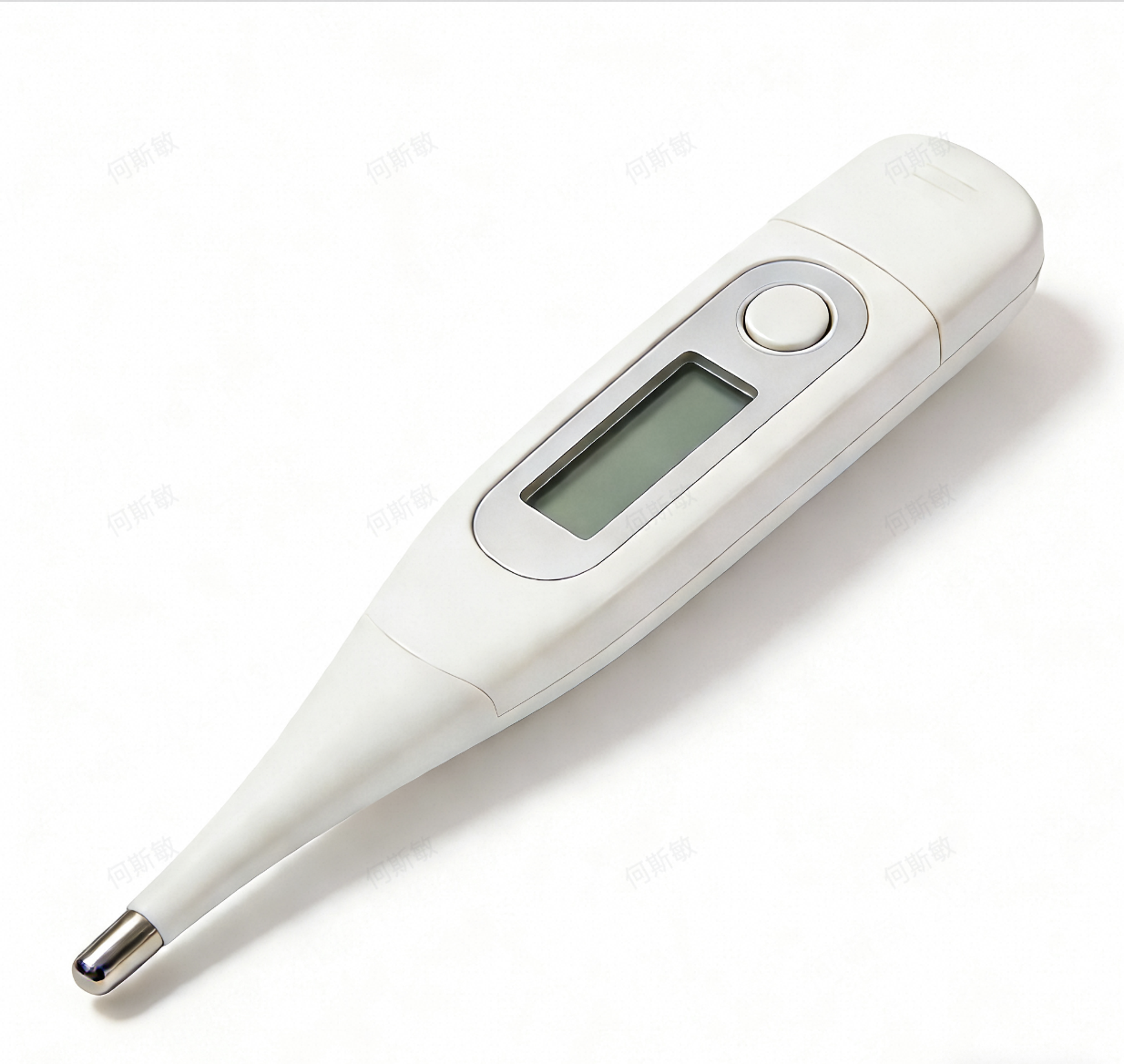
During the height of the pandemic, I watched the market become flooded with a dizzying array of digital infrared thermometers. They were everywhere. And as a physician, it was deeply concerning. We saw devices that were wildly inconsistent, giving three different readings on the same person in the span of a minute.
For you, the medical device distributor, this created a race to the bottom.
My position is simple: selling an unvalidated, unreliable thermometer to a clinical or professional customer is a significant business risk. The allure of a low price point is a siren song that often leads to a shipwreck of product returns, customer complaints, and a damaged reputation. This guide is designed to show you how to compare these devices like a clinician and a business strategist, focusing on the details that truly matter.
The biggest myth in this category is that all non-contact thermometers are essentially the same. They point, they beep, they show a number. Therefore, the cheapest one wins.
This is fundamentally untrue. The difference between a consumer gadget and a professional medical instrument is vast. It's in the quality of the thermopile sensor, the sophistication of the software that compensates for ambient temperature, and the durability of the housing that needs to withstand constant use and cleaning with harsh disinfectants. A cheap device feels flimsy in your hand—the plastic is thin, the trigger mechanism has a loose, unsatisfying click. That tactile feedback is a direct signal of the quality inside.
A spec sheet is not a business plan. A distributor's profitability isn't driven by the initial markup on a single sale; it's determined by the long-term reliability of the product and the strength of the manufacturing partner. A cheap device with a 5% failure rate will cost you far more in reverse logistics and angry customer emails than a quality device with a higher upfront cost and a <0.5% defect rate.
Here’s how I would compare these devices, looking beyond the brochure.
|
Feature / Consideration |
Typical Low-Cost Import |
Example: Exergen TemporalScanner™ |
VistaMed NCIT-500 |
Business Implication for a Distributor |
|
Accuracy Validation |
Vague claim of "accuracy" |
Clinically tested |
Rigorously validated to meet or exceed ISO 80601-2-56 standards (±0.2°C) |
Proof vs. Claim. A specific, verifiable standard is your only real assurance of quality. It’s an evidence-based sales tool, not a marketing slogan. |
|
Speed & Workflow |
2-3 second reading |
Requires swiping motion across forehead |
True 1-second, no-touch measurement |
Efficiency is a Feature. In a high-volume screening setting (a school, a clinic entrance), saving 2-3 seconds per person is a massive operational benefit. This is a key TCO selling point. |
|
User Feedback |
Simple numerical display |
Simple numerical display |
3-Color Backlit Display (Green/Yellow/Red for fever status) |
Clarity Reduces Error. An unambiguous, color-coded result reduces the chance of user misinterpretation and saves time. It shows the device was designed for professional use. |
|
Regulatory Footprint |
Questionable pre-MDR CE mark |
Strong FDA and CE |
FDA 510(k) Cleared & CE Marked under MDR 2017/745 |
High Risk vs. Stability. A partner with a modern FDA and EU MDR file has made a massive investment in their quality system. They are a stable, long-term partner, not a pop-up brand. |
Question 1: What is ISO 80601-2-56 and how do I use it to sell?
Think of it as your most powerful sales tool against cheap competitors. ISO 80601-2-56 is the international standard that specifies the accuracy requirements for clinical thermometers. When you can state that your device is validated against this global benchmark, you are providing objective proof of quality that a generic import cannot match. It immediately elevates your product from a gadget to a medical instrument.
Question 2: How do I justify a higher price when the competitor is so cheap?
You sell the Total Cost of Ownership (TCO). While this data is from the BP monitor category, the business principle is universal. An independent evaluation by MedVal-Labs found that our device offered a superior TCO compared to leading brands because it was more durable and reliable. The same is true for a thermometer. A professional-grade device with a 5-Year Warranty will outlast 3-4 cheap ones. It won't fail during a critical screening. The cost of one bad reading or one failed device during a flu outbreak is far higher than the initial price difference. That is the ROI you are selling.
Question 3: My customer is a school district, not a hospital. Do these regulatory details matter?
They matter more than ever. A school nurse, an occupational health manager, or a factory foreman—these users are not trained clinicians. They need a device that is simple, fast, and unambiguous. The 3-color fever alert is a perfect example. It removes any guesswork. The fact that the device has been cleared by the FDA and CE Marked under the stringent new EU MDR gives that school district or corporation the legal and ethical confidence that they are using a legitimate medical device for health screening, not an unreliable electronic toy. That is an enormous liability shield for them, and a huge selling point for you.
About the Author
Dr. Evelyn Reed, MD, serves as Lead Medical Content Reviewer & Clinical Advisor at VistaMed Technologies. With over a decade of experience in medical communications, she specializes in translating complex clinical data and technical information into clear, accurate, and actionable insights for healthcare professionals. This article draws on her deep experience evaluating the clinical evidence and real-world performance of vital signs monitoring technologies.
Clinically & Regulatory Reviewed By: Jian Wang (王健), RAC, Vice President, Quality & Regulatory Affairs
Medical Disclaimer:The information provided is for informational purposes and intended for a B2B audience of healthcare professionals and procurement decision-makers. It is not a substitute for professional medical or financial advice. TCO and ROI results may vary based on facility size, usage patterns, and local market conditions. All certifications and regulatory clearances referenced are accurate as of the date of publication. Please contact VistaMed Technologies for the most current documentation.

2026/02/25