 EN
EN
Unwavering Support for Healthcare Providers
2026/02/25
2026/02/26
Author: Fang Chen (陈芳)
Director of Global Product Strategy & Customer Insights at VistaMed Technologies
Fang Chen serves as the vital link between VistaMed's engineering teams and healthcare professionals, with 15 years of experience gathering deep insights from our 500+ client facilities and global distribution partners.
One of our distribution partners in Latin America once told me about a hard lesson he learned. He won a large tender with a low-cost fingertip pulse oximeter. Two months later, his support lines were flooded. The devices had flimsy battery doors that broke, and nurses complained the readings were "all over the place." The cost of replacing the units and placating the customer wiped out his entire profit.
His story is common. It's why the first question I get from new distributors is almost always about price. This FAQ is designed to answer the more important questions—the ones that lead to a profitable, sustainable business.
You stop competing on their terms. The race to the bottom on price is unwinnable and unprofitable. You win by changing the conversation from unit price to Total Cost of Ownership (TCO).
Your customer's real cost isn't what they pay you upfront. The true formula is:
True Profit = (Sales Margin) - (Cost of Returns & Replacements) - (Cost of Staff Time on Support) - (Cost of Lost Credibility)
Every time a cheap oximeter gives an erratic reading or its plastic casing cracks, it costs your customer in staff time and eroding clinical confidence. It costs you in support calls and damages your reputation as a quality supplier. Your most powerful sales tool is explaining how a slightly higher-priced, higher-quality device eliminates those hidden costs, delivering a lower TCO.
"Clinical-grade" is more than a marketing slogan; it's a commitment to performance and reliability under real-world clinical stress. This is how you sell it:
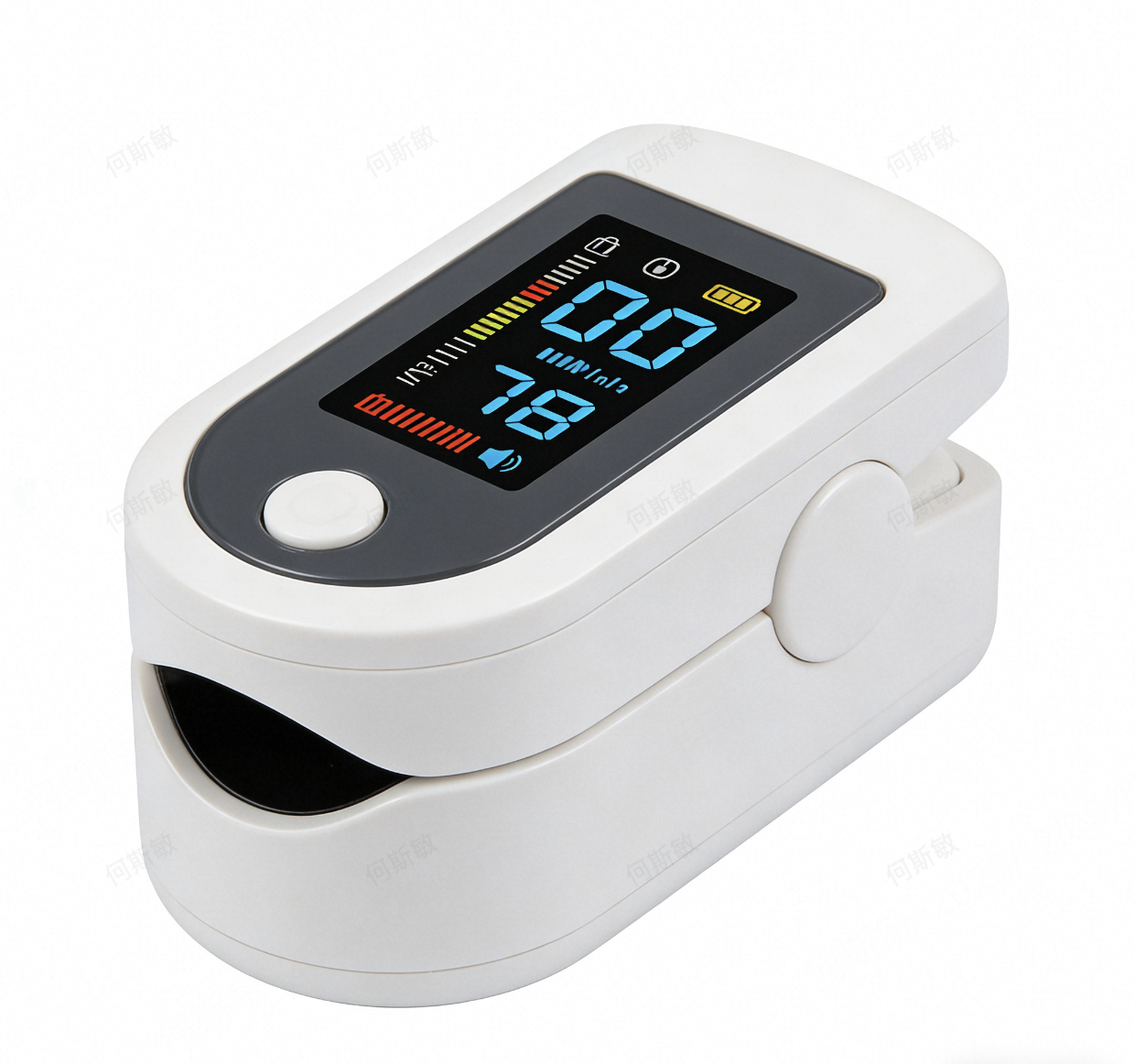
Focus on Differentiating Features. A basic oximeter gives an SpO2 number. A clinical-grade device, like our FPO-50, provides a Perfusion Index (PI) display. The PI indicates the strength of the blood flow, giving clinicians crucial context about the quality of the reading, especially in patients with poor circulation. This is a specific feature you can use to demonstrate superior clinical utility.
Highlight Regulatory Engagement. A serious manufacturer is deeply engaged with the toughest clinical challenges. For example, the US FDA has highlighted the importance of oximeter accuracy across different skin pigmentations. When you partner with a manufacturer who invests in the R&D and clinical testing to address these complex issues, you are selling a partnership with an industry leader.
You demonstrate that quality equals efficiency. While the following data comes from a project on blood pressure monitors, the principle is universal for all high-volume clinical devices. In a project with Unity Health System, they found that standardizing on a reliable, easy-to-use device led to a:
This is a powerful, data-driven story. You aren't just selling an oximeter. You are selling your customer nearly 50% less time spent training staff and dealing with broken equipment. You are selling them more time for patient care. That is an ROI they understand.
For a critical YMYL device like a pulse oximeter, you must demand a deep, transparent partnership. It's your brand on the line.
Your checklist should include:
Choosing the right manufacturing partner is the single most important decision you'll make. It's the difference between being a low-margin box-shifter and a high-value, trusted solutions provider.
About the Author
Fang Chen (陈芳) serves as Director of Global Product Strategy & Customer Insights at VistaMed Technologies. She is the vital link between VistaMed's engineering teams and healthcare professionals, with 15 years of experience gathering deep insights from over 500 client facilities and global distribution partners. This article draws on her countless conversations with distributors about the hidden costs of low-quality suppliers and the ROI of a true quality partnership.
Clinically & Regulatory Reviewed By: Dr. Evelyn Reed, MD, Lead Medical Content Reviewer & Clinical Advisor
Medical Disclaimer:The information provided is for informational purposes and intended for a B2B audience of healthcare professionals and procurement decision-makers. It is not a substitute for professional medical or financial advice. TCO and ROI results may vary based on facility size, usage patterns, and local market conditions. All certifications and regulatory clearances referenced are accurate as of the date of publication. Please contact VistaMed Technologies for the most current documentation.

2026/02/25