 EN
EN
Unwavering Support for Healthcare Providers
2026/02/25
2026/02/20
Author: Dr. Evelyn Reed, MD
Lead Medical Content Reviewer & Clinical Advisor at VistaMed Technologies
As a licensed physician specializing in medical communications, Dr. Reed translates complex clinical data and technical information into clear, accurate, and actionable insights for healthcare professionals and partners.
In my work reviewing clinical data, I once came across the case of an 88-year-old man with mild COPD whose daughter bought him a cheap pulse oximeter. She was told that anything "95% or higher" was normal. When his reading was consistently 93-94%, she dismissed it. A week later, he was hospitalized for a severe COPD exacerbation that had been silently progressing.
This story is a stark reminder that in medicine, "normal" is rarely a single number. For you, the medical device distributor, understanding this nuance isn't just about clinical knowledge; it's about protecting your reputation and equipping your customers to make better decisions. This FAQ will give you the evidence-based answers you need.
The most common and clinically dangerous myth in oximetry is that a blood oxygen level of 95% or higher is normal for every person.
From a clinical perspective, this is a gross oversimplification. While 95-100% is a typical range for a healthy person at sea level, an individual's "normal" can be influenced by a host of factors. For an elderly patient, their baseline SpO2 may be lower due to underlying health conditions. Selling a pulse oximeter with the simplistic message that "95% is normal" is a liability. Your role as a value-added distributor is to provide a tool and the knowledge to use it responsibly.
The most accurate answer is: it depends on the patient's individual clinical picture. However, a good framework is:
The key takeaway for your customers is that the trend is often more important than a single reading. A sudden, unexplained drop from a patient's established baseline is always a cause for clinical concern.
This is a critical question for customer support and sales. An inaccurate low reading can cause unnecessary panic. Common culprits include:
You build trust with layers of verifiable proof that a low-cost supplier simply cannot provide.
First, you highlight a commitment to solving the industry's toughest challenges. The US FDA has rightly placed a major focus on ensuring pulse oximeter accuracy across different skin pigmentations. A manufacturer who can provide data on their device's performance in diverse populations is demonstrating a commitment to health equity and clinical rigor.
Second, you leverage global regulatory strength. The new European medical device regulations, which are fully searchable in the EU MDR database, require manufacturers to produce an exhaustive Clinical Evaluation Report (CER). A CE Mark under this new regulation is a powerful testament to the quality and depth of a manufacturer's clinical evidence.
A professional oximeter is designed to overcome the challenges of monitoring an elderly population. While the following data comes from a project on a different device, the principle of quality design is universal. In a project with Unity Health System, they found that standardizing on our reliable, easy-to-use devices led to a 47% reduction in nurse training time and a 41% decrease in maintenance-related downtime.
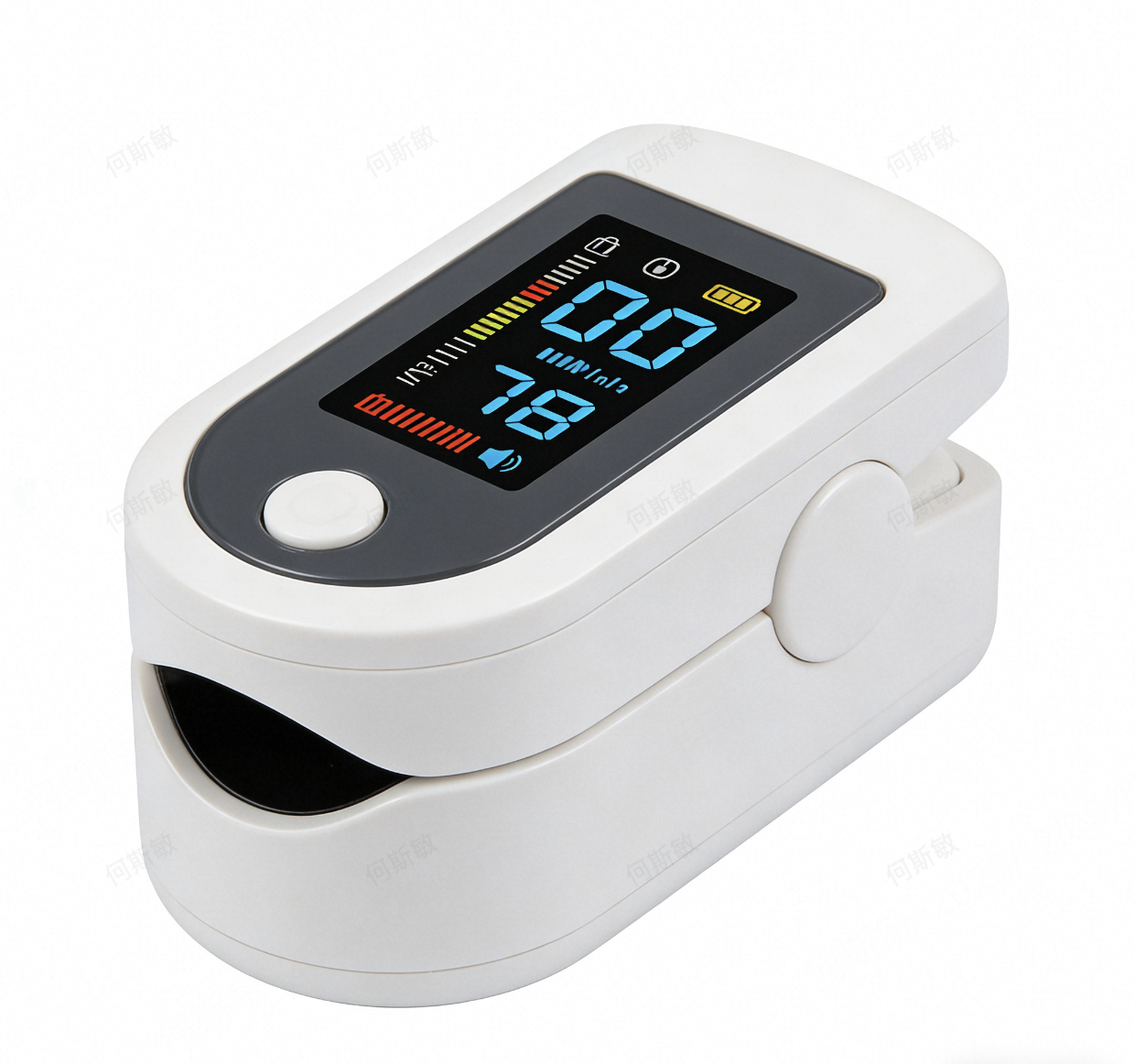
This principle directly applies to a device like the FPO-50. Its simple, one-button operation and bright, rotatable OLED display reduce user error, whether the user is a nurse, a caregiver, or the patient themselves. This is not just a "feature"; it's a direct contributor to a lower Total Cost of Ownership and more reliable data collection.
"As a distributor, every device you sell is a reflection of your company’s clinical judgment. In the elderly population, where vital signs can be subtle, the difference between a cheap gadget and a validated medical instrument is profound. Your customers—and their patients—rely on you to know the difference."
— Dr. Evelyn Reed, MD
About the Author
Dr. Evelyn Reed, MD, serves as Lead Medical Content Reviewer & Clinical Advisor at VistaMed Technologies. With over a decade of experience in medical communications, she specializes in translating complex clinical data and technical information into clear, accurate, and actionable insights for healthcare professionals. This article draws on her deep experience evaluating the clinical evidence and real-world performance of vital signs monitoring technologies.
Clinically & Regulatory Reviewed By: Dr. Michael Bauer, PhD, Head of Clinical Research
Medical Disclaimer:The information provided is for informational purposes and intended for a B2B audience of healthcare professionals and procurement decision-makers. It is not a substitute for professional medical or financial advice. TCO and ROI results may vary based on facility size, usage patterns, and local market conditions. All certifications and regulatory clearances referenced are accurate as of the date of publication. Please contact VistaMed Technologies for the most current documentation.

2026/02/25