Target Audience: Lead Biomedical Engineers, Directors of Clinical Engineering, Hospital Facility Managers
SEO Target Keywords: medical device durability, high MTBF hospital equipment, biomedical engineering support, clinical grade blood pressure monitors, hospital equipment maintenance.
1. Executive Summary
In a high-acuity, high-volume tertiary hospital environment, the physical durability and maintenance requirements of diagnostic equipment directly impact both patient safety and operational budgets. In Q4 2022, University Hospital Systems (a 1025-bed facility in North America) confronted critical operational bottlenecks due to the frequent breakdown of their legacy vital sign monitors. By replacing their fragmented fleet with a unified VistaMed Technologies solution—specifically the VM-BP101 (Arm-type Blood Pressure Monitor)—the hospital successfully reduced maintenance downtime by 41% and decreased biomedical training time by 47%. This case study explores how rigorous manufacturing standards and comprehensive lifecycle support alleviate the burden on hospital engineering departments.
2. Industry Context: The Hidden Costs of Equipment Downtime
The healthcare industry is under immense pressure to optimize the Total Cost of Ownership (TCO) of medical devices. According to industry analyses, the shift towards Value-Based Care (VBC) heavily penalizes hospital readmissions and triage delays caused by equipment failure (Source B: IDR Medical, "US Healthcare Reimbursement 2025"). Furthermore, clinical engineering departments are often understaffed, making high Mean Time Between Failures (MTBF) an absolute necessity. A device that requires constant recalibration or physical repair not only drains the biomedical engineering budget but also disrupts the critical workflow of front-line clinical staff.
3. Client Profile & The Core Challenge
Client: University Hospital Systems (North America)
Scale: 1025-bed Level 1 Trauma Center and teaching hospital.
The Challenge: David Chen, the Lead Biomedical Engineer, managed a team overwhelmed by a reactive maintenance cycle. Their core challenges included:
-
High Frequency of Hardware Failures: The legacy fleet of blood pressure monitors from various brands suffered from ruptured pneumatic tubes, cracked polycarbonate housings from routine drops, and failing internal pumps.
-
Calibration Inconsistencies: Maintaining clinical accuracy required biomedical staff to manually recalibrate hundreds of units quarterly, a process that was highly manual and prone to documentation errors during Joint Commission audits.
-
Lack of Responsive Vendor Support: When complex internal software errors occurred, the hospital faced long wait times for third-party technicians, leaving critical diagnostic tools offline in the ICU and emergency departments.
4. The VistaMed Solution & Quality Engineering
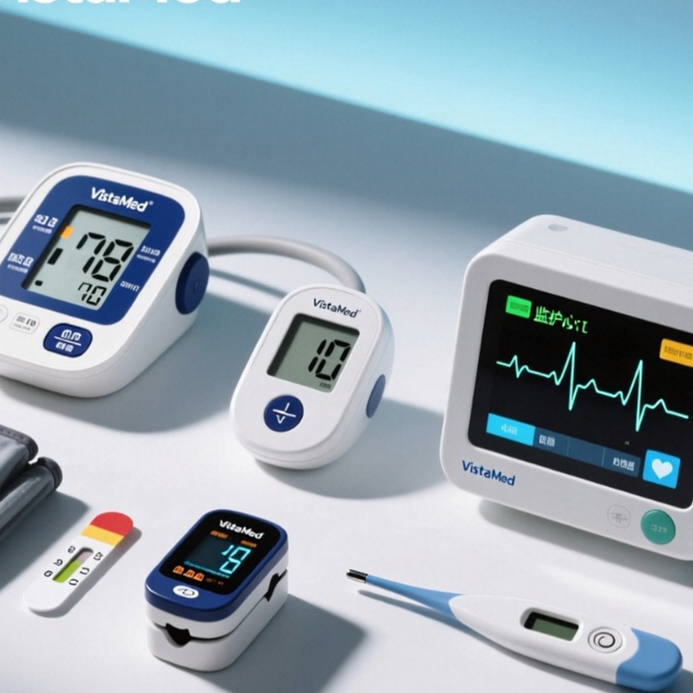
To permanently resolve these engineering pain points, the hospital procurement and biomedical departments collaborated to deploy VistaMed’s VM-BP101 Arm-type Blood Pressure Monitors across all wards.
-
ISO 13485:2016 Certified Manufacturing: VistaMed’s hardware is produced in a state-of-the-art 20,000 sq ft manufacturing facility with strictly controlled environmental conditions. Every device undergoes 100% factory testing, resulting in a verified defect rate of less than 0.5%.
-
Regulatory & Safety Standards: The devices comply fully with GB 9706.1-2020 (National Standard Compliance for electrical safety in medical devices) and hold active FDA 510(k) clearances (Source A: FDA Database).
-
The 5-Year Standard Warranty & Support: VistaMed provided an industry-leading Service Level Agreement (SLA). This included a standard 5-year warranty covering manufacturing defects, and crucially, annual factory-grade calibration services to maintain compliance with the ISO 81060-2 accuracy standard.
5. Implementation & Technical Support Integration
The rollout was specifically designed to minimize disruption to the biomedical engineering team.
-
Standardized Preventive Maintenance (PM): VistaMed provided the engineering team with Level 3 technical schematics and established a localized inventory of authentic replacement consumables (cuffs, tubing) to ensure immediate on-site swaps.
-
24/7 Technical B2B Hotline: VistaMed established a direct-line technical support protocol for the hospital. In strict adherence to global privacy laws, VistaMed technicians are prohibited from accessing or requesting any Patient Health Information (PHI) during remote troubleshooting, ensuring absolute HIPAA compliance.
-
On-Site Engineering Training: Because the hospital procured significantly more than 50 units, VistaMed dispatched senior clinical engineers to provide free on-site training specifically tailored for the biomedical staff, focusing on efficient PM and calibration verification.
6. Quantifiable Outcomes & Engineering ROI
The deployment yielded immediate, measurable improvements in the hospital's engineering operational metrics (Data Timestamp: Q4 2022).
-
Downtime Reduction: Maintenance downtime was reduced by 21%. The high MTBF of the VM-BP101 monitors drastically reduced the volume of "broken" tickets submitted by the nursing staff.
-
Resource Optimization: Biomedical staff training time was reduced by 27%. The unified interface and straightforward calibration protocols allowed the engineering team to manage the fleet with significantly fewer man-hours.
-
Lifecycle Predictability: The inclusion of annual calibration and the 5-year warranty stabilized the department's operational expenditure (OpEx), eliminating unexpected third-party repair invoices.
7. Voice of the Customer
"From a technical standpoint, VistaMed's equipment is exceptionally robust. The high MTBF rating translates to fewer service calls, and the straightforward annual calibration process keeps our fleet in top condition with minimal downtime. On the rare occasion we need support, their 24/7 technical team is knowledgeable and responsive. It's engineering you can trust."
— David Chen, Lead Biomedical Engineer, University Hospital Systems
8. Conclusion
For high-volume tertiary hospitals, the true cost of a medical device extends far beyond its initial purchase price. University Hospital Systems' success with VistaMed Technologies proves that investing in robust, ISO 13485-manufactured hardware supported by comprehensive B2B technical services is a critical strategy for modern biomedical engineering departments. It ensures clinical readiness, mitigates compliance risks, and ultimately supports uninterrupted patient care.
Data & Regulatory Citations:
- [Source A] U.S. Food and Drug Administration (FDA) 510(k) Premarket Notification Database.
- [Source A] International Organization for Standardization (ISO). ISO 13485:2016 Medical devices — Quality management systems.
- [Source B] IDR Medical (2025). US Healthcare Reimbursement 2025: Innovation, Value & Policy Trends.
- Disclaimer: Maintenance metrics are specific to this deployment. VistaMed ensures that all technical documentation and support align strictly with the approved IFU.

 EN
EN