 EN
EN
Unwavering Support for Healthcare Providers
2026/02/25
2026/02/19
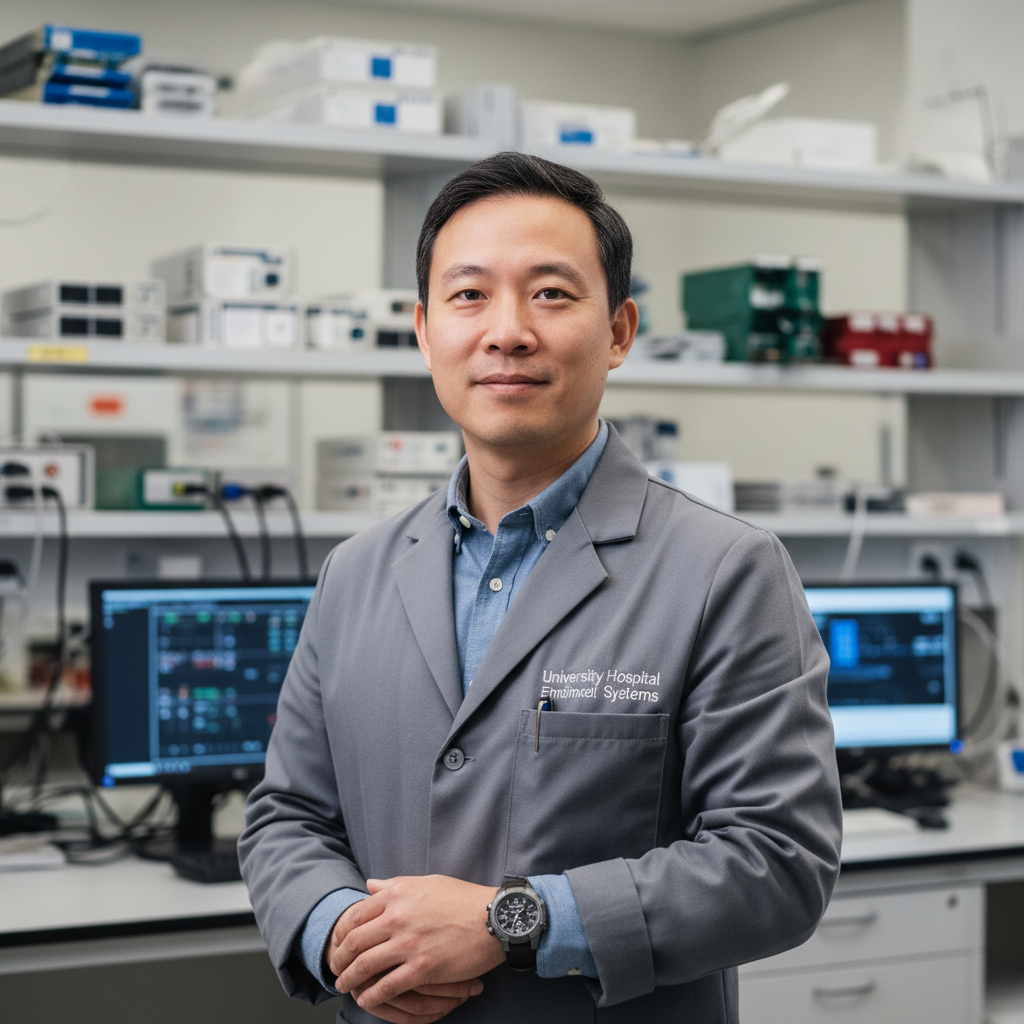
Author: Dr. Wei Li (李伟), PhD
Chief Technology Officer & Head of R&D at VistaMed Technologies
With over 20 years in biomedical engineering, Dr. Li is the lead inventor on a significant portion of VistaMed's 87 granted patents and the driving force behind our technological innovation.
The most frequent question I get from colleagues at industry conferences isn't about our current products. It’s about a product that doesn’t yet exist in a clinically reliable form: an accurate, FDA-cleared non-invasive glucose monitor. For hospital procurement directors and clinicians, it represents a holy grail. For an engineer, it represents one of the most formidable challenges in modern medical technology.
Many companies have tried. All have so far failed to deliver a device that meets the rigorous standards for hospital use. As a CTO, it's my job to understand why. This is a technical breakdown of the problem.
"Measuring blood glucose non-invasively is like trying to hear a single person whispering in a packed, roaring football stadium. The 'whisper' is the glucose signal. The 'stadium' is the human body—water, fat, muscle, and hundreds of other physiological confounders all screaming at the same time. Our job is to engineer a microphone and software smart enough to isolate that one whisper. This is a signal-to-noise challenge of an entirely different magnitude than other vital signs."
— Dr. Wei Li (李伟), PhD
Decades of research have focused on a few primary methods for "listening" for that whisper. Each has immense potential and its own set of daunting engineering hurdles.
|
Technology |
Measurement Principle |
Primary Engineering Hurdle |
|
Mid-Infrared (MIR) Spectroscopy |
Measures the unique way glucose molecules absorb specific wavelengths of light passed through the skin. |
Water is a massive confounder; it absorbs light very strongly in the same spectral region, drowning out the faint glucose signal. |
|
Raman Spectroscopy |
A laser excites molecules in tissue, causing them to scatter light in a unique "fingerprint." The algorithm looks for the glucose fingerprint. |
Requires a powerful, stable laser and a highly sensitive detector. Extremely susceptible to interference from other molecules. |
|
Reverse Iontophoresis |
Uses a tiny electrical current to pull glucose molecules from the interstitial fluid through the skin to be measured by a sensor. |
The amount of glucose extracted is miniscule and can be affected by skin condition, sweat, and temperature, making consistent calibration a nightmare. |
The sensor itself—the "microphone" in my analogy—is only a small part of the puzzle. The true breakthrough, when it comes, will be in the software.
As an engineer who has led the development of dozens of diagnostic algorithms, including the one behind our MedTech Breakthrough Award-winning IntelliScan AI Diagnostic System, I can state with certainty that the hardware is only 20% of the solution. The other 80% is the sophisticated, AI-driven algorithm required to process a weak, noisy signal and translate it into a clinically accurate and reliable glucose value. This requires a level of expertise in signal processing, machine learning, and sensor fusion that very few organizations possess.
1. When can our hospital realistically expect an FDA-cleared device for clinical use?
From an engineering standpoint, a device that meets the accuracy and reliability standards for hospital use is likely still several years away. The regulatory bar for a device that informs insulin dosing is extraordinarily high, and the technical challenges remain immense. Be extremely skeptical of any claims of an imminent release.
2. What about the "non-invasive glucose" smartwatches advertised online?
These are not medical devices. They are wellness gadgets that typically use correlations with other metrics to estimate glucose trends, not measure them directly. They have not undergone FDA 510(k) review for this feature and should never be used for clinical decision-making.
3. From an R&D perspective, how should we evaluate a startup that claims to have a breakthrough?
Demand to see their peer-reviewed, published data. A real breakthrough will be published in a high-impact journal like The Lancet or presented at a major AAMI conference, not just announced in a press release. Ask to see their data on accuracy across a diverse population and in the presence of common interferences. Finally, ask about their patent portfolio. Real innovation results in granted patents; we hold 87 precisely because solving these problems requires novel engineering.
The team that finally solves this problem will have world-class expertise in both sensor physics and AI-driven algorithms. They will have a culture of rigorous scientific validation and the patience to tackle a multi-decade challenge. As a fellow engineer, I have immense respect for those working on this problem. As a CTO, I know that a breakthrough will come from a foundation of deep, proven engineering excellence.
About the Author
Dr. Wei Li (李伟), PhD serves as Chief Technology Officer & Head of R&D at VistaMed Technologies. Based at our Shenzhen R&D headquarters, he leads the engineering teams responsible for developing our entire product portfolio, from AI-assisted diagnostic systems to high-precision monitoring devices. With over 20 years of experience in biomedical engineering, Dr. Li is the lead inventor on a significant portion of VistaMed's 87 granted patents. This article draws upon his deep, first-hand expertise in the science of biomedical signal processing and diagnostic algorithm design.
Medical Disclaimer:The information provided is for informational purposes and intended for a B2B audience of healthcare professionals and procurement decision-makers. It is not a substitute for professional medical or financial advice. TCO and ROI results may vary based on facility size, usage patterns, and local market conditions. All certifications and regulatory clearances referenced are accurate as of the date of publication. Please contact VistaMed Technologies for the most current documentation.
2026/02/25