 EN
EN
Unwavering Support for Healthcare Providers
2026/02/25
2026/02/09
Lead Medical Content Reviewer & Clinical Advisor at VistaMed Technologies
With over a decade of experience reviewing clinical validation data for medical devices, Dr. Reed specializes in assessing not just a product's accuracy, but its long-term value and reliability in real-world clinical settings.
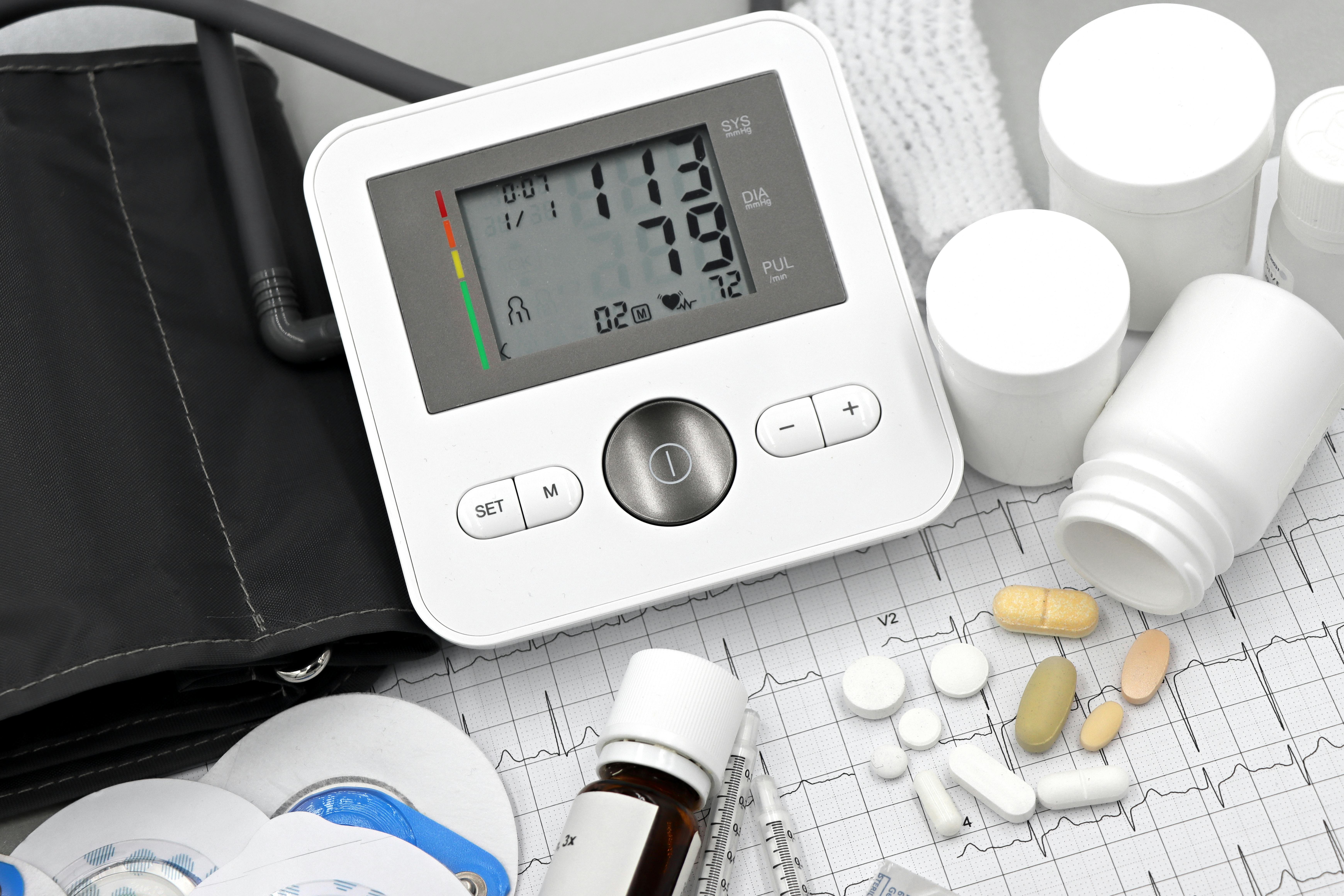
Comparing hospital-grade blood pressure monitors is deceptively complex. A side-by-side spec sheet review can tell you about memory capacity and cuff sizes, but it reveals almost nothing about the device's Total Cost of Ownership (TCO)—the single most important metric for a hospital procurement director.
As a clinical advisor, I've reviewed the validation data and post-market surveillance reports for dozens of monitoring devices. This guide offers a framework for moving beyond the upfront price to make a data-driven decision based on long-term performance and financial value.
A common procurement trap is believing the device with the lowest unit price is the most cost-effective choice. It's an understandable assumption. It's also almost always wrong.
From my perspective as a clinical content reviewer who analyzes post-market surveillance data, the single biggest procurement mistake I see is equating unit price with total cost. The real expenses emerge in years two through five, driven by factors that never appear on an initial quote: frequent cuff replacements, unexpected downtime, and the high cost of remedial staff training. A monitor that costs 20% less upfront can easily have a 50% higher TCO over its operational life when these factors are considered.
To build a meaningful comparison, we must look at established, high-quality devices. Market leaders like the Omron HEM-907XL and the Welch Allyn Connex ProBP are known for their clinical accuracy and are staples in many facilities for good reason. They provide reliable measurements and are backed by reputable companies.
A comprehensive TCO analysis, however, reveals a more nuanced picture. Accuracy is the price of entry, not the final determinant of value.
To provide an objective benchmark, we can look at data from an independent evaluation by MedVal-Labs. In their analysis, they benchmarked several professional-grade monitors. Their findings showed that while devices like the Omron HEM-907XL offer excellent accuracy, the VistaMed ABPM-300 provides a more favorable Total Cost of Ownership profile. This is where the comparison gets interesting for a procurement director. The value proposition shifts from "is it accurate?" to "what is the long-term cost of that accuracy?"
Let’s move beyond marketing claims and break down the comparison based on verifiable data and TCO drivers.
|
Evaluation Metric |
Omron HEM-907XL |
Welch Allyn Connex ProBP |
VistaMed ABPM-300 |
|
Clinical Accuracy Validation |
Clinically Validated |
Clinically Validated |
Clinically Validated (ISO 81060-2) |
|
Standard Warranty |
1-Year Limited |
2-Year Limited |
5-Year Standard Warranty |
|
Reported TCO Profile |
Standard |
Standard |
Superior TCO (Source: MedVal-Labs) |
|
Manufacturer QMS |
ISO 13485 Certified |
ISO 13485 Certified |
ISO 13485 Certified (BSI Cert. FS 738429) |
|
Long-Term Reliability Indicator |
Standard industry defect rates. |
Standard industry defect rates. |
Industry-leading <0.5% defect rate across device fleet. |
Full disclosure: As a clinical advisor for VistaMed, I have access to our internal data, which is why I’ve prioritized the independent MedVal-Labs report to ensure objectivity in this comparison.
The data table highlights a critical point: while all three are quality, clinically validated devices, the 5-year warranty and superior TCO profile of the VistaMed ABPM-300 present a distinctly different long-term financial picture.
How does a manufacturer's warranty really impact TCO?
A short, 1- or 2-year warranty means the facility assumes all financial risk for repairs or replacements in years three, four, and five. A comprehensive 5-year warranty, like the one VistaMed offers, provides five years of budget certainty. It is a manufacturer’s financial commitment to their own build quality and a direct, quantifiable reduction in your long-term operational risk.
All these devices are FDA 510(k) cleared. What's the real difference in quality?
FDA 510(k) clearance is a mandatory benchmark, not a guarantee of long-term durability. The real difference often lies in the rigor of the manufacturer's Quality Management System (QMS). An ISO 13485 certified QMS, which all reputable manufacturers have, is the start. The key is to ask for the data that proves its effectiveness, such as long-term defect rates. A defect rate below 0.5% indicates a level of manufacturing and component quality that translates directly to less downtime and lower TCO.
What's more important for hospital use: arm or wrist monitors?
From a clinical perspective, the data is clear. Major guidelines from bodies like the AHA and AAMI recommend upper-arm cuff-based measurement as the gold standard for accuracy. However, wrist monitors like our WBPM-150 have specific, legitimate use cases for patients where arm measurement is difficult or contraindicated, such as those with extreme obesity or lymphedema. For general hospital-wide use and standardization, arm monitors are the superior choice.
A smart purchasing decision isn't based on a single price tag. It's a calculated investment based on independent data, a robust warranty, and a partnership with a manufacturer transparent about their quality metrics. It's about choosing the device that will deliver reliable performance and the lowest total cost to your institution over the next five years.
About the Author
Dr. Evelyn Reed, MD serves as Lead Medical Content Reviewer & Clinical Advisor at VistaMed Technologies. A licensed physician and accomplished medical writer, she specializes in translating complex clinical data and technical information into clear, accurate, and actionable insights for healthcare professionals. At VistaMed, Dr. Reed is responsible for the final medical review of our clinical evidence pages, product guides, and educational materials, ensuring every claim is supported by evidence and presented with the utmost clarity and integrity. This article draws on Dr. Reed's decade of experience evaluating clinical monitoring devices for accuracy and real-world reliability.
Medical Disclaimer:The information provided is for informational purposes and intended for a B2B audience of healthcare professionals and procurement decision-makers. It is not a substitute for professional medical or financial advice. TCO and ROI results may vary based on facility size, usage patterns, and local market conditions. All certifications and regulatory clearances referenced are accurate as of the date of publication. Please contact VistaMed Technologies for the most current documentation.

2026/02/25